
Federal cases involving the aggravated identity-theft statute declined 8% from fiscal 2021 to fiscal 2025, according to updated United States Sentencing Commission data.
The commission counted 561 cases involving 18 U.S.C. § 1028A among 66,662 felony and Class A misdemeanor cases reported for fiscal 2025. The data cover sentencing events, not every reported instance of identity theft.

Section 1028A carries a mandatory minimum term of 24 months that generally must run consecutively to punishment for another offense. Ninety-two percent of people convicted under the provision were also convicted of another offense in fiscal 2025.
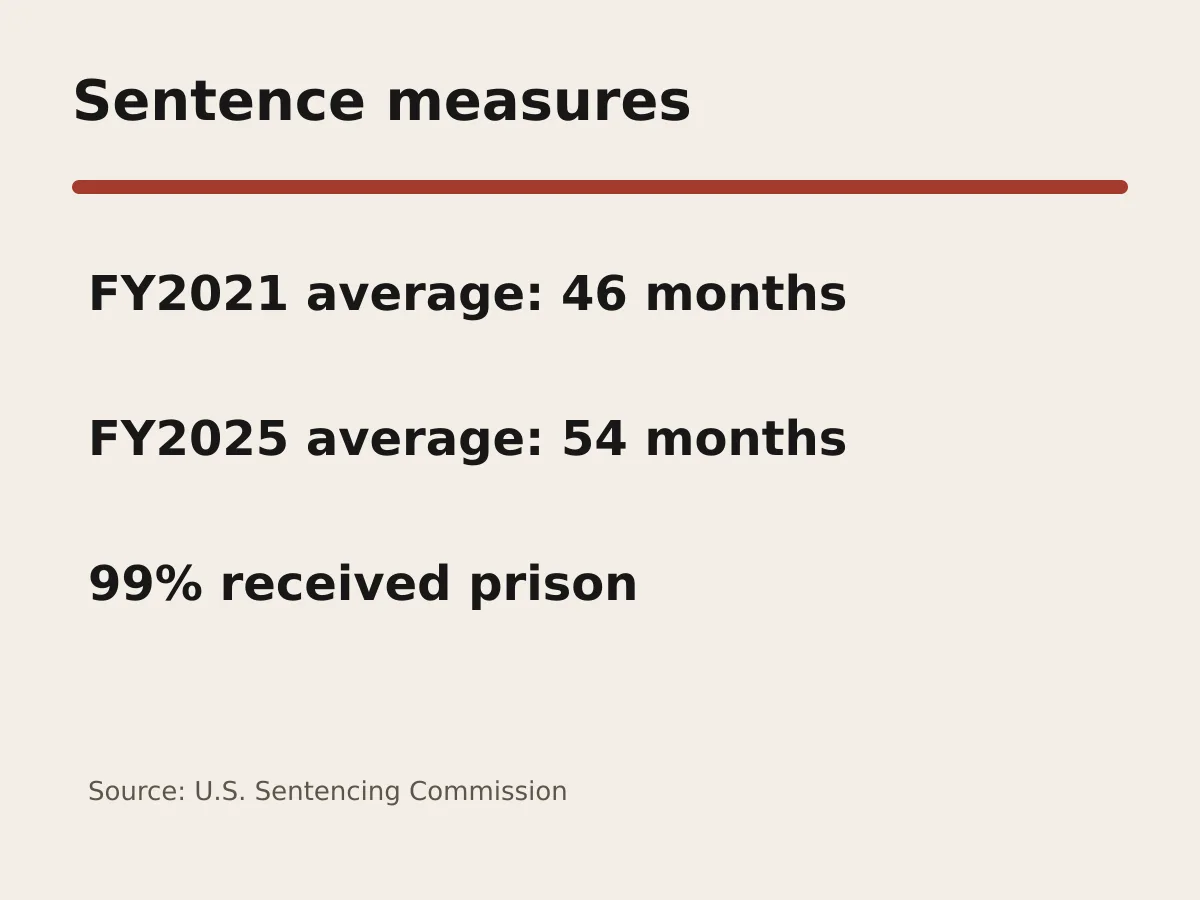
The average sentence was 54 months, and 99% of sentenced individuals received prison terms. The average was 24 months for cases involving only section 1028A and 57 months when another offense was also present.
Average punishment increased even as the number of cases fell. The average guideline minimum rose from 61 months in fiscal 2021 to 71 months in fiscal 2025, while the average sentence imposed rose from 46 months to 54 months.
Half of the sentenced individuals were in Criminal History Category I, which indicates little or no prior criminal history under the federal guidelines. The average age was 38.
Florida had the two districts with the largest case counts: the Southern District of Florida reported 50 and the Middle District reported 36. Those counts describe where federal cases were sentenced, not population-adjusted offending rates.
The commission excludes cases with incomplete information from some calculations and caps certain sentence-length analyses under its sourcebook methods. Documents for fiscal 2025 cases had to be reported to the commission by February 26, 2026.
The data establish a smaller section 1028A caseload than four years earlier, alongside longer average sentences. They do not explain why charging patterns, underlying conduct or sentence outcomes changed.