
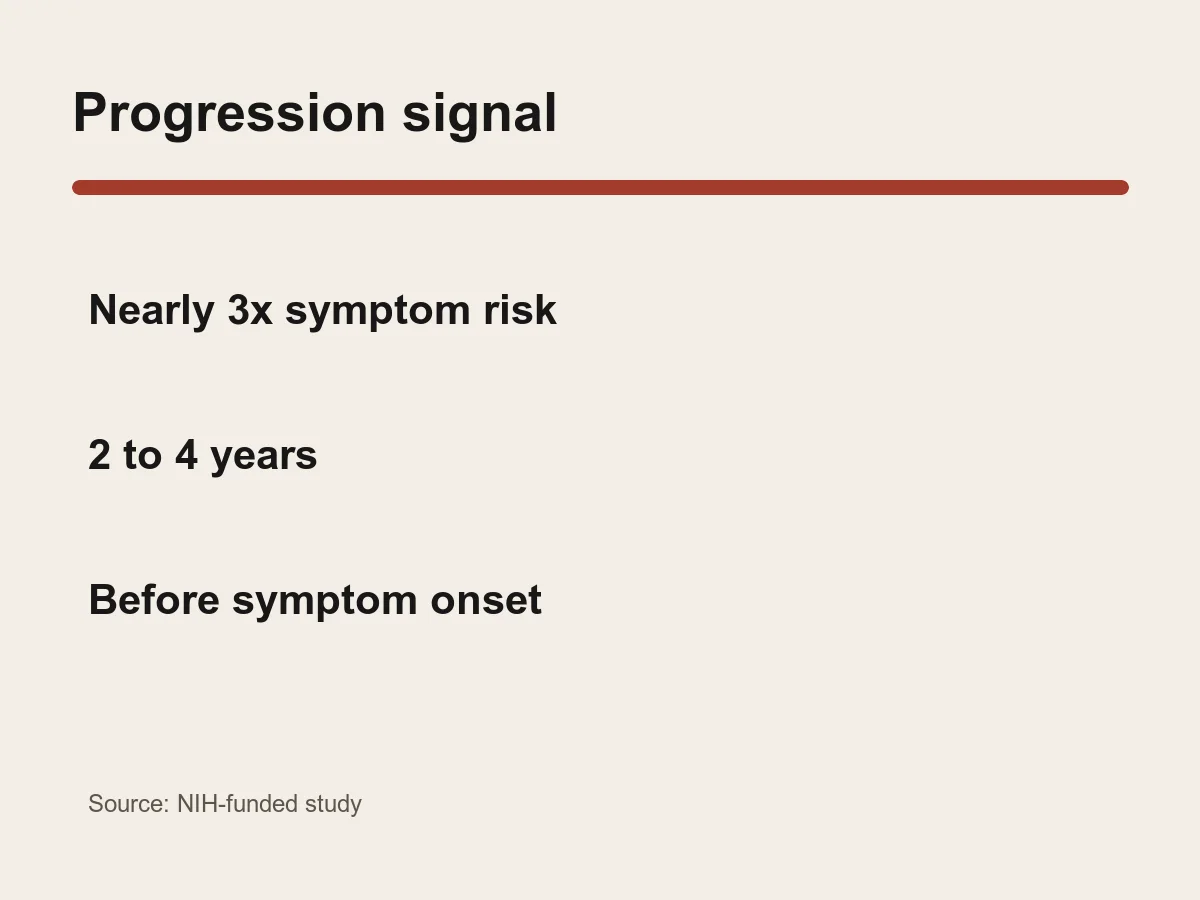
Elevated levels of a group of circular RNA molecules in blood were associated with nearly three times the risk of progressing to symptomatic Alzheimer’s disease in an NIH-funded study.
Circular RNAs are stable loops of genetic material. Unlike amyloid plaques, which can accumulate slowly for years, their levels may reflect more recent biological activity.
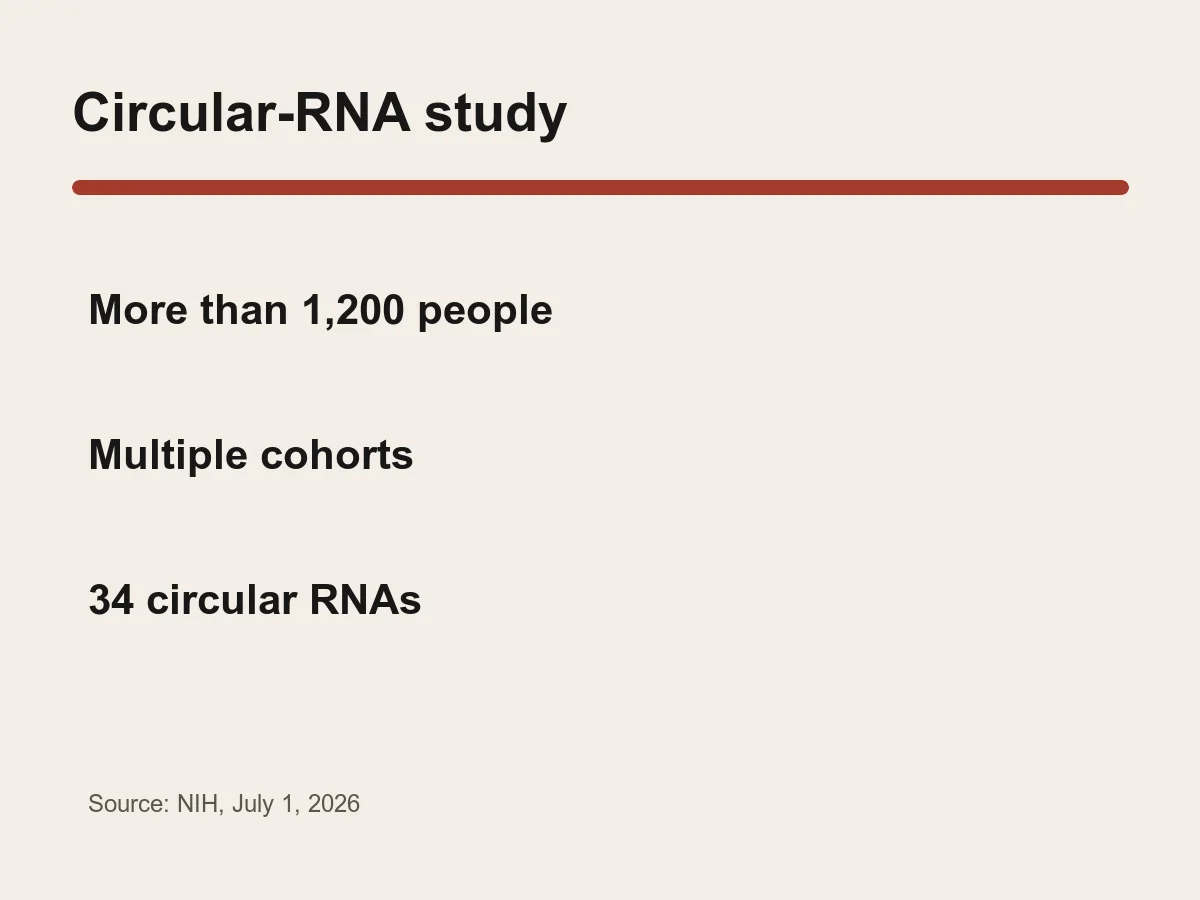
Researchers analyzed blood data from more than 1,200 people across multiple independent cohorts. They identified 34 circular RNAs associated with Alzheimer’s disease.
A model using those 34 molecules identified Alzheimer’s pathology about as well as a model based on pTau217, a leading protein blood biomarker.
The difference appeared in forecasting progression. NIH said the circular-RNA model was better at predicting who would develop symptoms, with the RNA levels diverging from normal about two to four years before onset.
The researchers reported similar findings in samples from two independent cohorts. Replication across cohorts strengthens the result but does not substitute for prospective clinical validation.
The work could help select participants for prevention trials or monitor response to treatments. Those are research uses; the study does not establish that the model improves patient outcomes.
No clinical circular-RNA assay is available from this report. Researchers are working with commercial partners on translatable tests, and performance in routine care may differ from performance in study cohorts.
The nearly threefold figure is a relative risk estimate, not a certainty that an individual will develop symptoms. Useful next evidence includes prespecified prospective testing, absolute-risk calibration and comparison across populations before clinical adoption.