
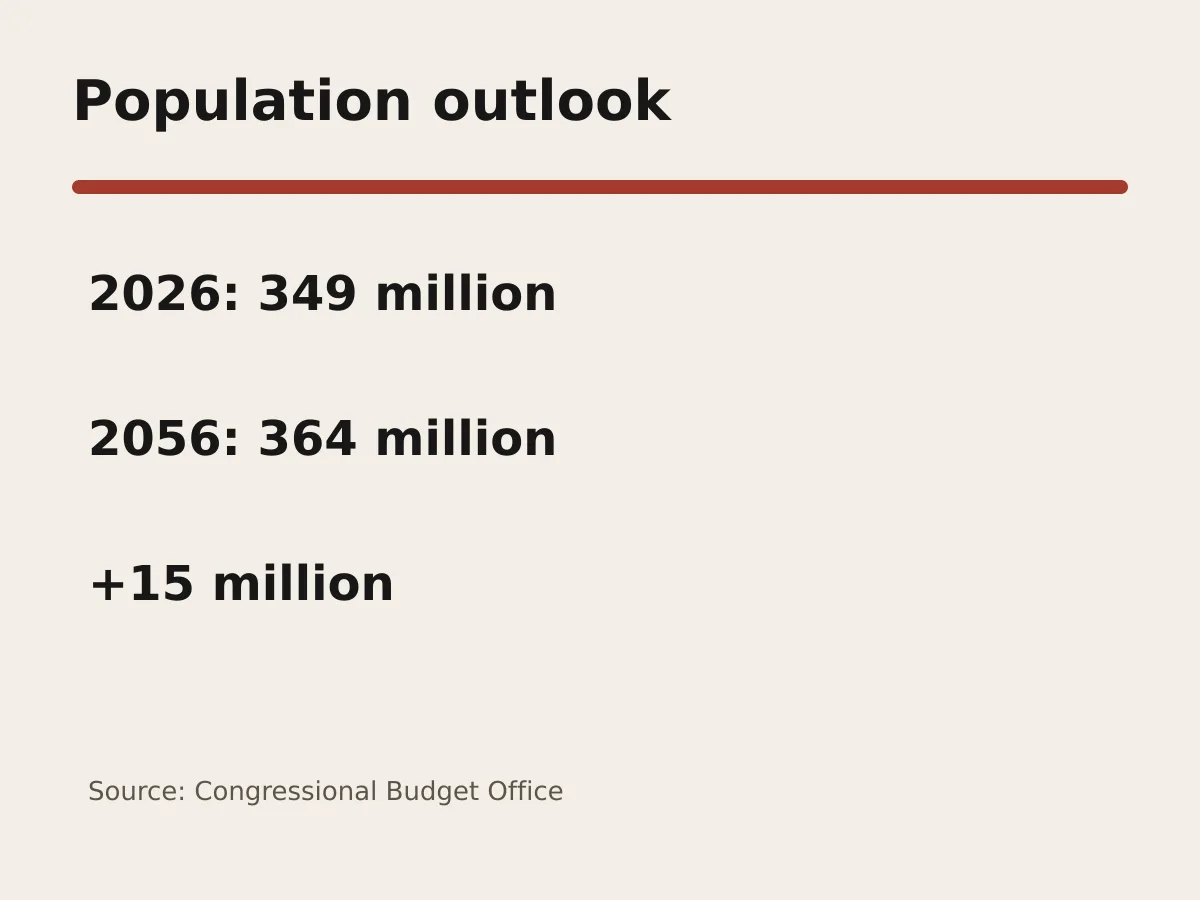
The U.S. population relevant to Social Security is projected to grow from 349 million people in 2026 to 364 million in 2056 while becoming older on average, the Congressional Budget Office said in its latest demographic outlook.
That increase of about 15 million over three decades amounts to slow average growth. CBO said the age shift matters for the economy and federal budget because older people are less likely to work and are generally eligible for Social Security and Medicare.
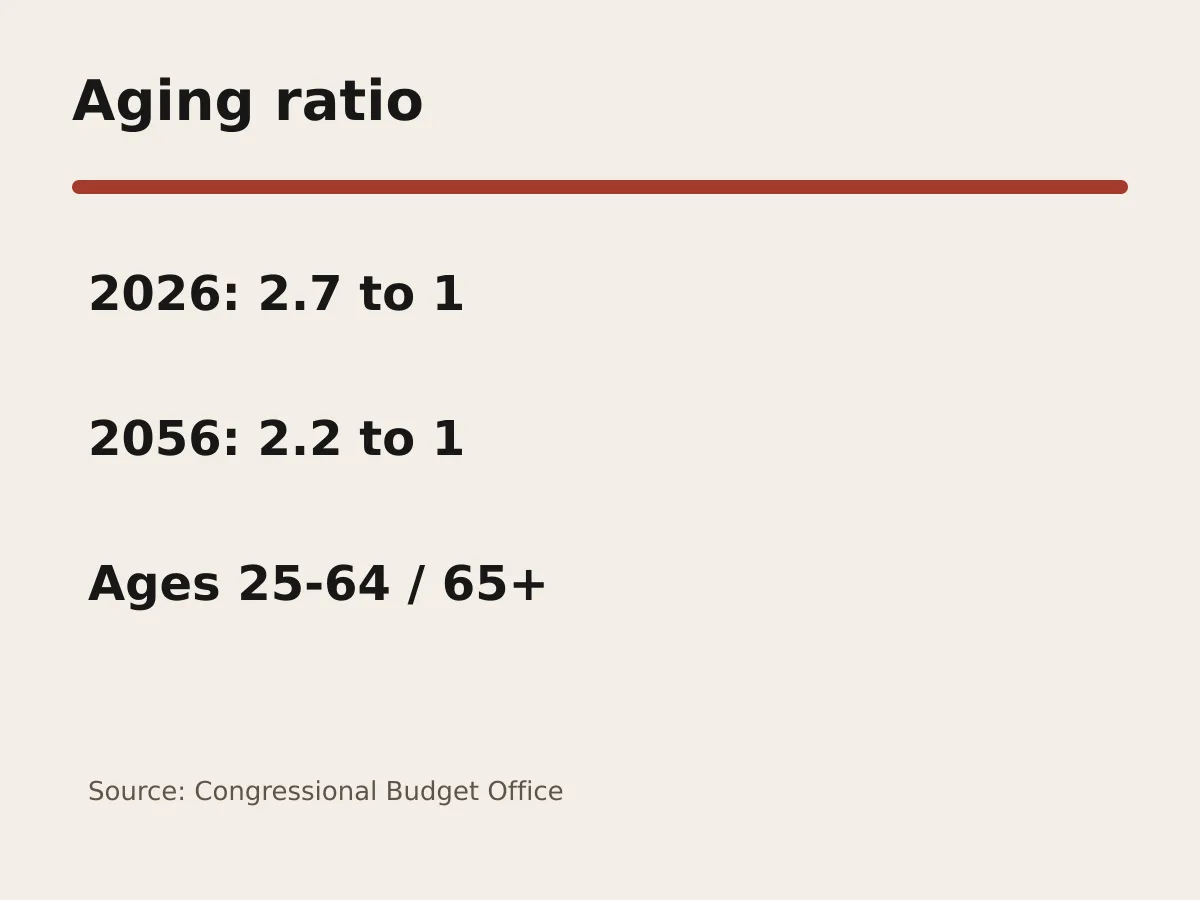
The office projects 2.7 people ages 25 to 64 for every person age 65 or older in 2026. By 2056, the ratio is expected to fall to 2.2 to one.
The population age 24 or younger is projected to decline in every year of the 30-year period. The number of people ages 25 to 54 rises through 2042 and then declines, while the 65-and-older population grows fastest in the first decade.
CBO projects life expectancy at birth to rise from 79.0 years in 2026 to 82.3 years in 2056. It also expects fertility to remain below the replacement rate, reaching about 1.53 births per woman in 2035.
Immigration becomes an increasingly important source of population growth under the projection. The categories and assumptions reflect laws, policies and administrative actions in place when CBO completed the forecast.
Compared with its January 2025 outlook, CBO now projects 8 million fewer people in 2055, mainly because of lower near-term net immigration and lower fertility assumptions.
These are baseline projections, not targets or certain outcomes. Fertility, mortality, migration, legislation and administrative policy can differ materially from the assumptions, and small annual gaps compound over 30 years.
The report supplies Congress with a common demographic baseline: modest total growth, fewer young people and a smaller working-age population relative to retirees will shape future labor-force and benefit-program debates.