
Federal courts sentenced 718 people for credit-card and other financial-instrument fraud in fiscal 2025, according to the United States Sentencing Commission's latest offense profile.
The cases represented about 1.1% of the 66,662 federal cases reported to the Commission. The offense count was down 8% from fiscal 2021, when the comparable category included 777 cases.
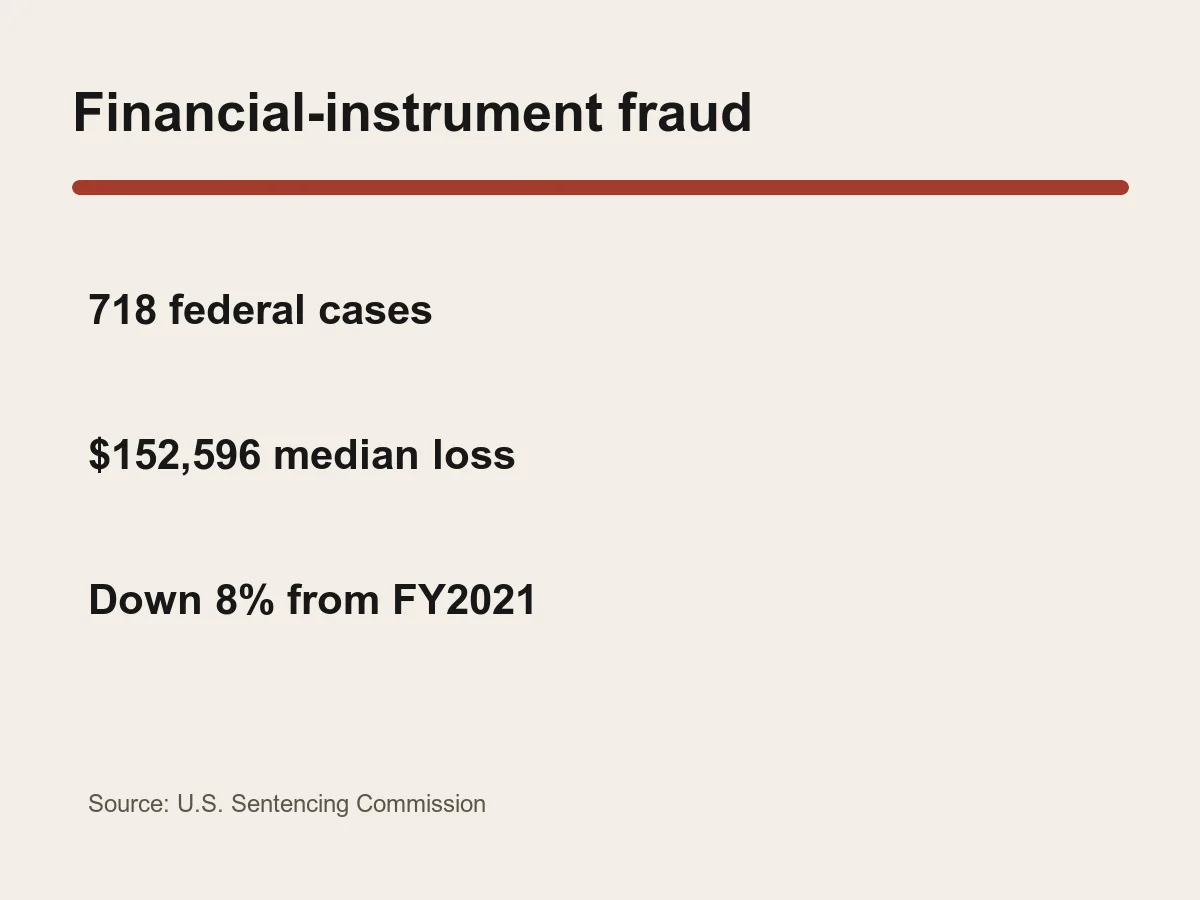
The median loss was $152,596. Fifteen percent of cases involved less than $15,000, while 27% involved more than $550,000.
The Commission defines the category to include fraudulent activity involving credit cards, debit cards, checks, bank accounts or non-mortgage loans sentenced under the main theft-and-fraud guideline. It is broader than the stand-alone credit-card category used before fiscal 2020.
The average sentence imposed was 28 months, and 95% of sentenced individuals received prison terms. Twenty percent were convicted of an offense carrying a mandatory minimum; 15% of that group received relief from the penalty.
Half of the cases received a sentence increase tied to the number of victims or extent of harm. Unauthorized identification affected 39%, sophisticated means 21% and a leadership or supervisory role 13%.
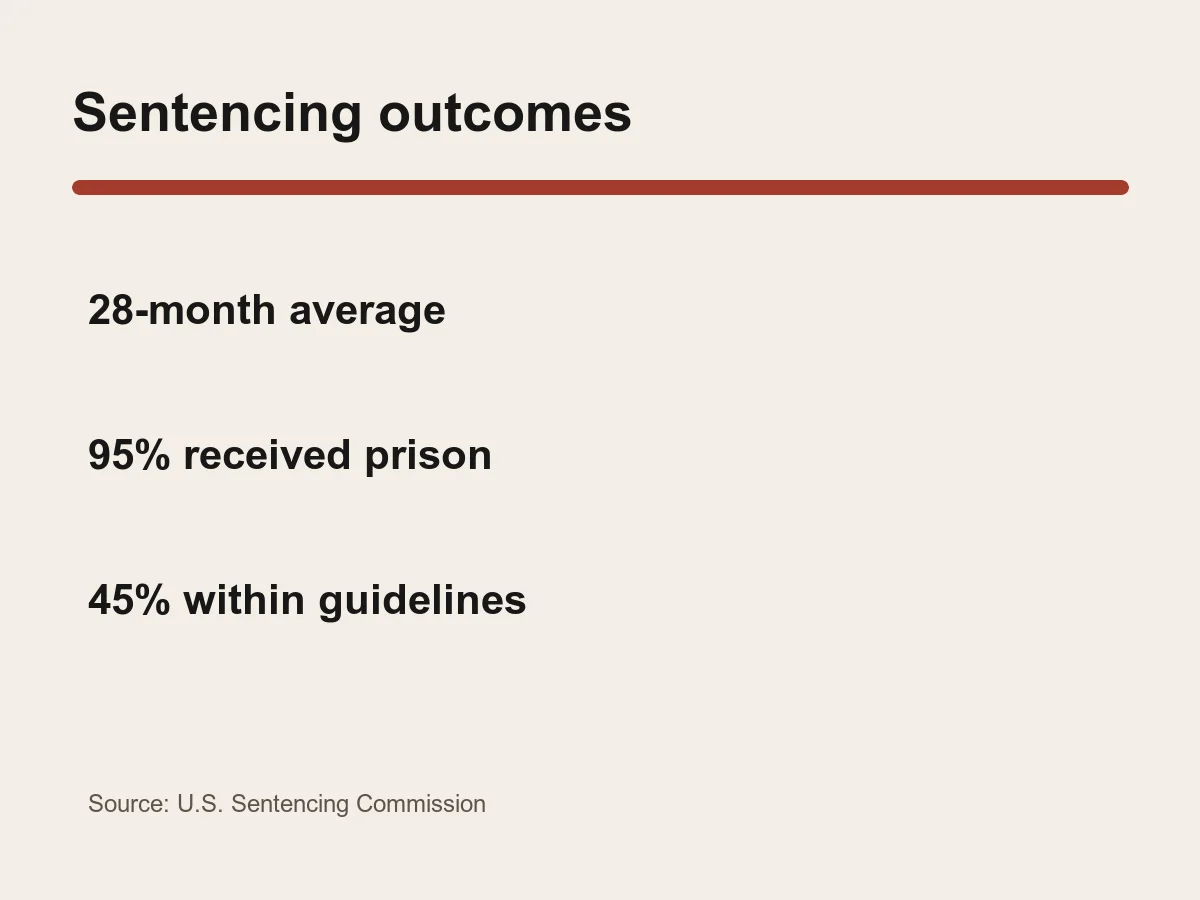
Forty-five percent of sentences were within the guideline range. Thirteen percent were substantial-assistance departures, 38% were downward variances and 2% were upward variances.
The data describes completed federal sentencing outcomes, not arrests, unresolved allegations, state prosecutions or victim reports. Cases with incomplete sentencing information were excluded from the Commission's analysis.
Aggregate loss and sentence figures do not predict any individual case. Conduct, criminal history, guideline findings, statutory penalties, cooperation and judicial decisions vary by defendant.