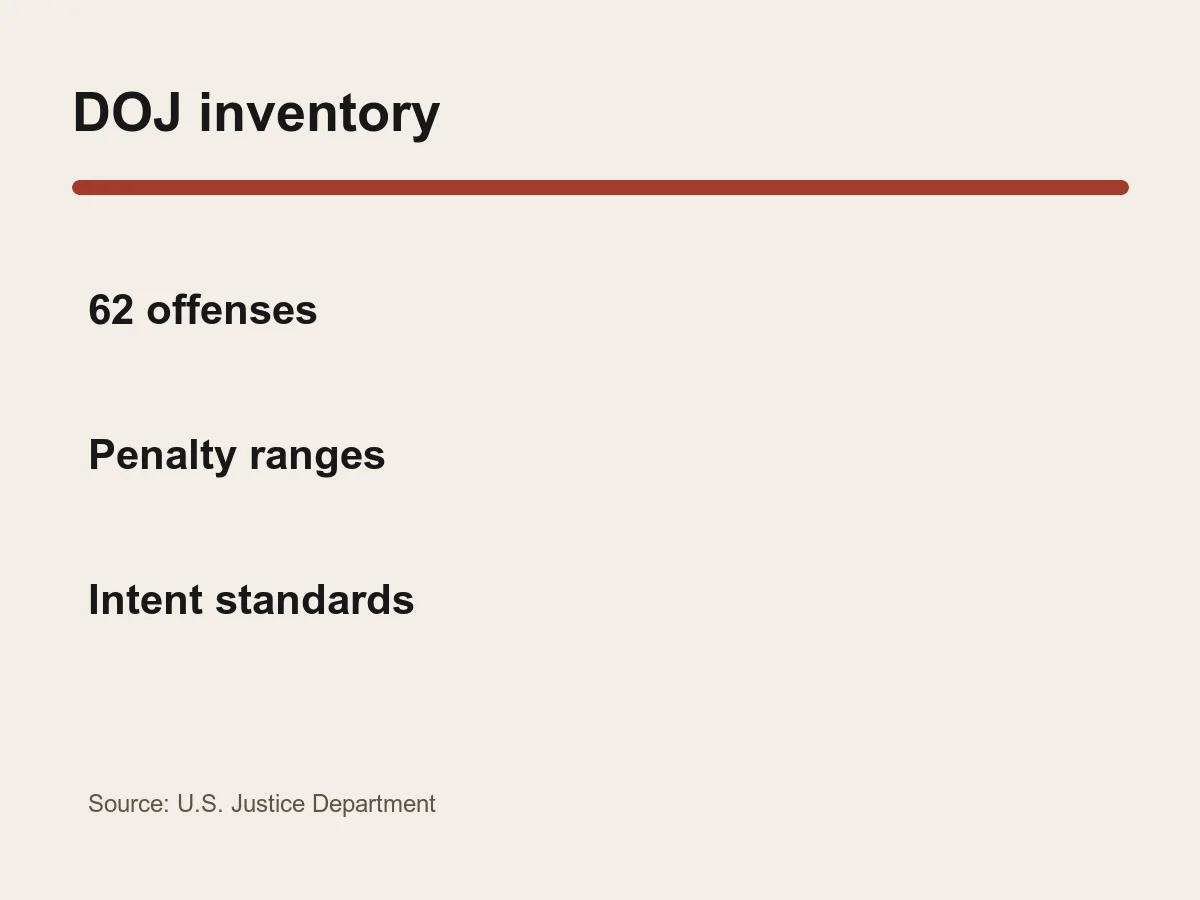
The Justice Department identified 62 criminal regulatory offenses that it can enforce and cataloged their potential penalties and intent standards in an April 28 report to the Office of Management and Budget.
The inventory responds to Executive Order 14294, which directed executive agencies to list regulatory violations carrying criminal consequences. DOJ's Office of Legal Policy also distributed guidance and a model spreadsheet so agencies would report offenses in a consistent format.
DOJ said it is not a typical regulatory agency because it usually prosecutes criminal statutes enacted by Congress rather than creating offenses through its own rules. The Drug Enforcement Administration and the Bureau of Alcohol, Tobacco, Firearms and Explosives identified possible regulatory offenses for the department's list.
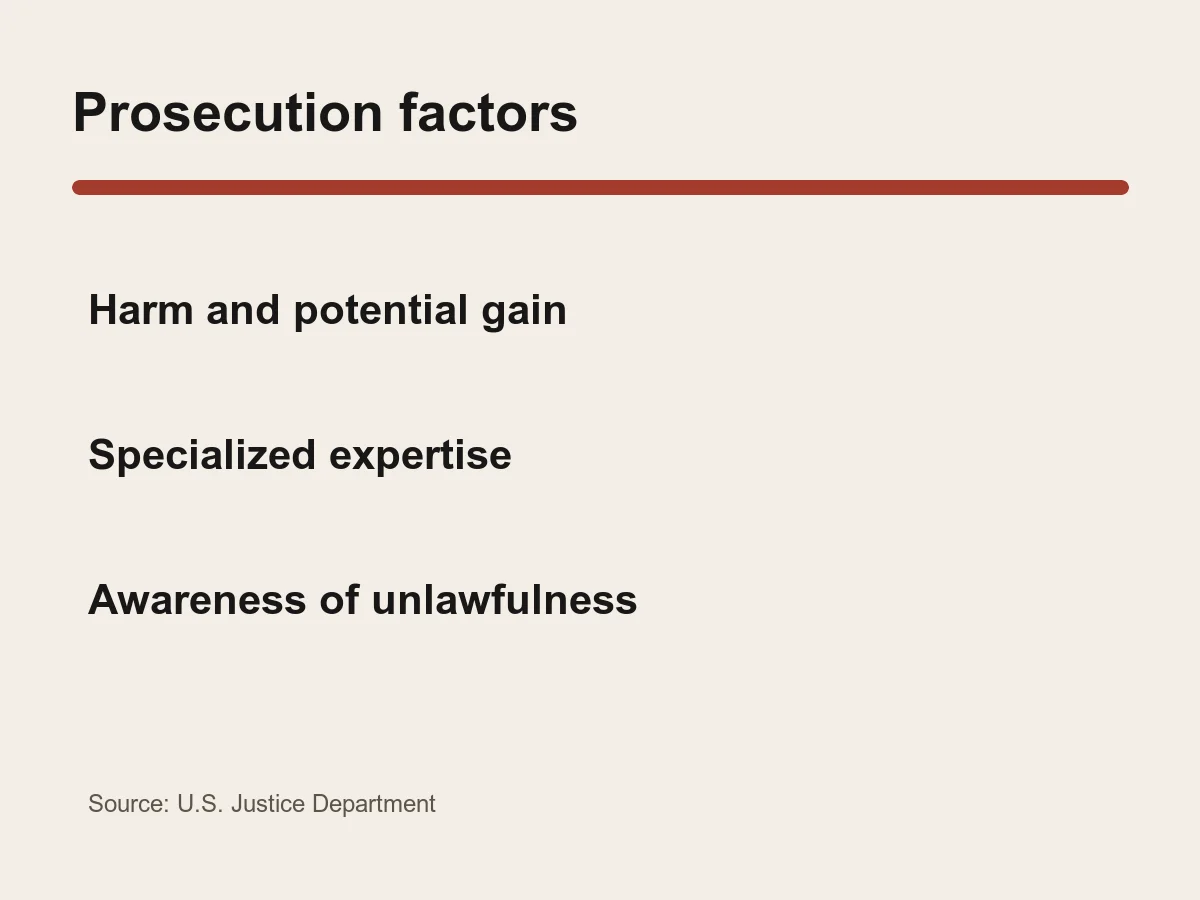
The report also states a general prosecution policy, subject to legal requirements and appropriate exceptions. Prosecutors should consider the harm or risk of harm associated with the alleged offense and the potential gain to the person under investigation.
Two other listed factors concern notice and expertise: whether a person held specialized knowledge or a relevant license, and evidence about awareness that the conduct was unlawful or knowledge of the specific regulation.
Those considerations are not a new element of every offense and do not guarantee a charging result. Statutes, regulations, department policy, admissible evidence and the facts of an individual matter still control prosecutorial decisions.
DOJ directed components to prioritize offenses that the department had enforced, threatened to enforce or expected to enforce. The resulting count should not be read as the total number of federal crimes or as a count of prosecutions.
The executive order cited more than 48,000 sections and 175,000 pages in the Code of Federal Regulations. Those figures describe the broader regulatory code; DOJ reported 62 offenses in its own inventory.
The report is a transparency record rather than a change to criminal liability by itself. Its practical effect is to make the department's identified regulatory offenses, penalty ranges and stated charging considerations easier to audit.