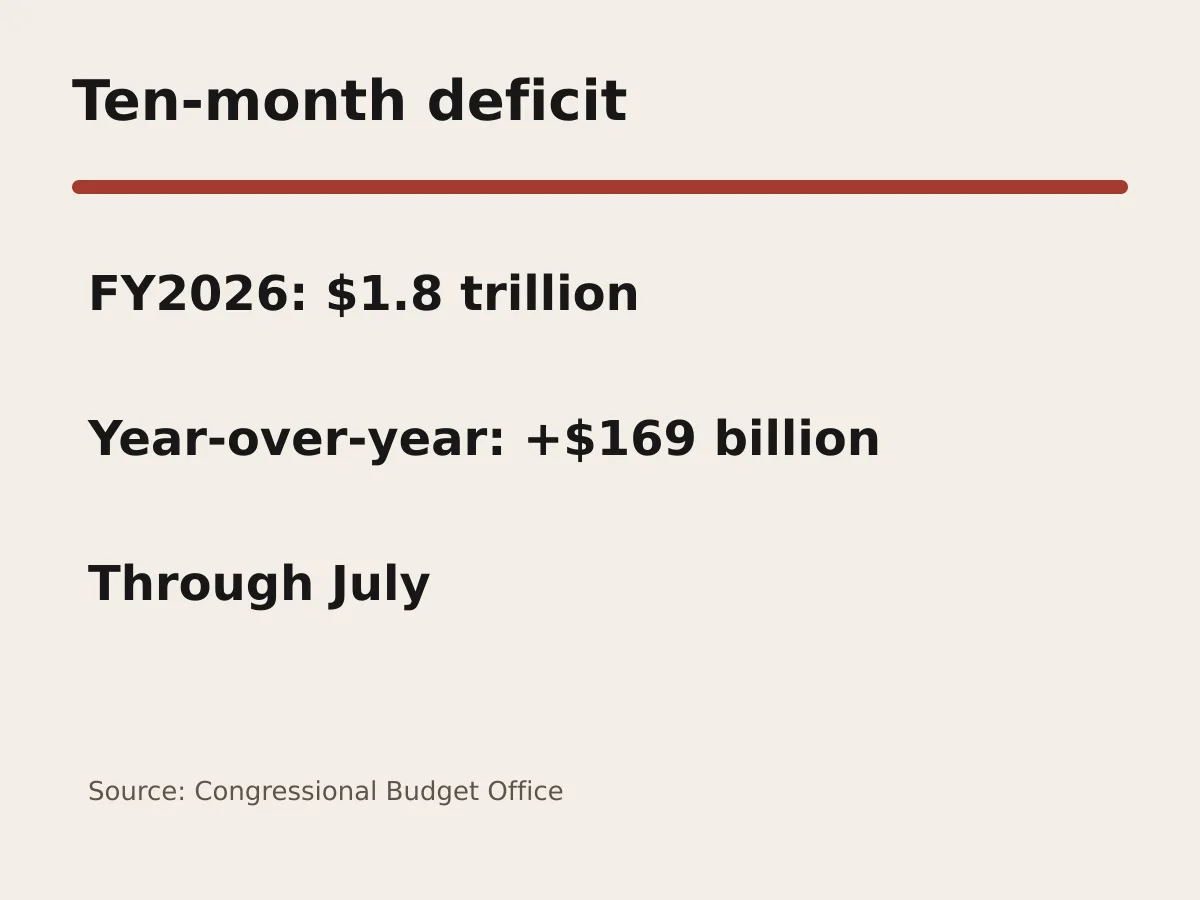
The federal budget deficit totaled an estimated $1.8 trillion in the first 10 months of fiscal 2026, the Congressional Budget Office reported Monday.
That shortfall was $169 billion larger than in the same October-through-July period a year earlier. The estimate updates CBO's monthly budget tracking with two months remaining in the fiscal year.
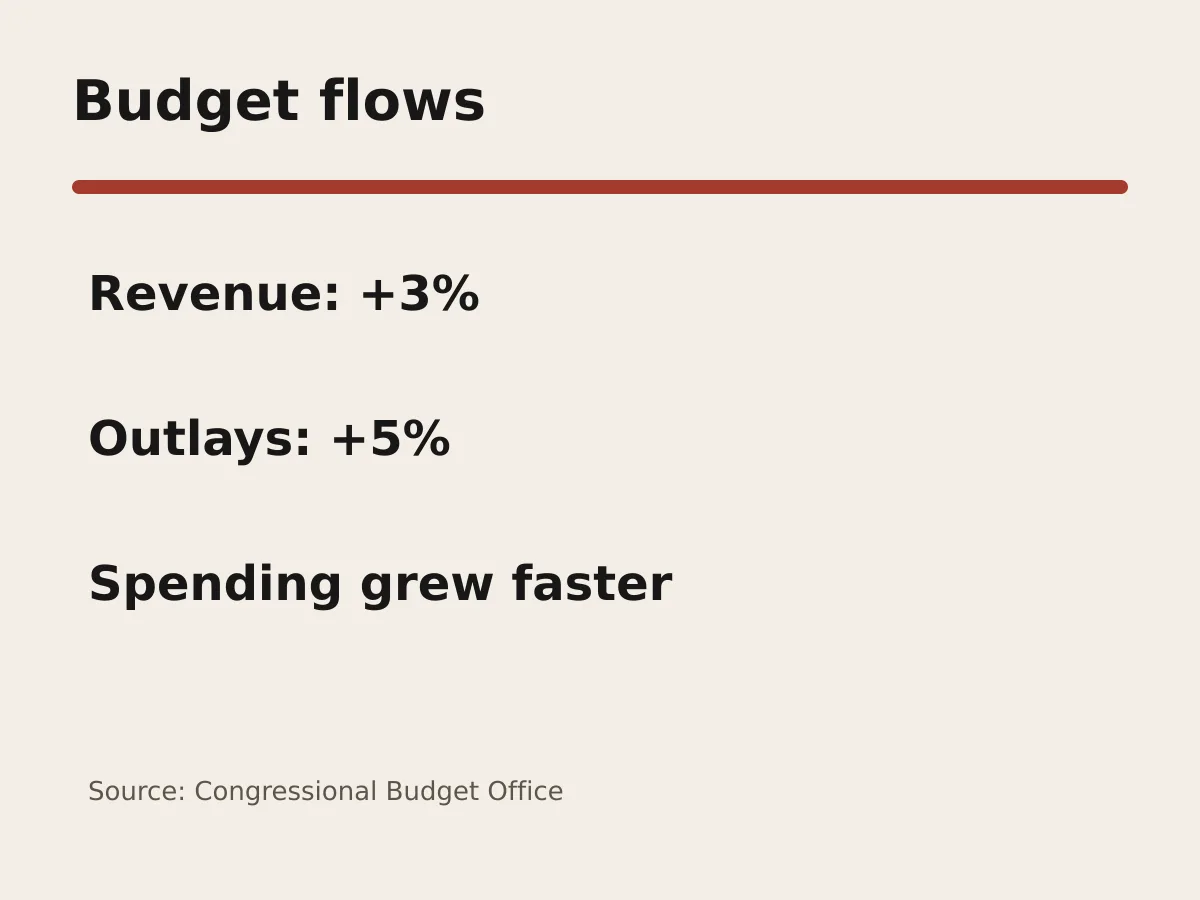
Federal revenues rose by $139 billion, or 3%, compared with the first 10 months of fiscal 2025. Outlays increased by $308 billion, or 5%, so spending growth exceeded the additional receipts.
A deficit measures the gap between federal outlays and revenues during the period. It adds to federal borrowing but is not the same as the total national debt accumulated across years.
Monthly results can be affected by the timing of weekends, holidays and benefit payments. CBO's review adjusts comparisons when calendar shifts move transactions between months, and Treasury later reports finalized figures.
The July update extends the trajectory CBO reported through June, when the cumulative shortfall was about $1.4 trillion. The additional month should not be read as a simple trend line because receipts and spending are seasonal.
CBO's monthly review is an estimate based on daily Treasury statements and other information available before the government's official monthly statement. Small revisions can occur when final accounting data arrive.
The figures describe the enacted federal budget, not the separate long-term projections lawmakers use to assess future debt. Policy changes, economic conditions, interest costs and emergency spending can alter the final two months and later years.
For the fiscal year to date, the central result is clear: both sides of the ledger grew, but the 5% increase in outlays was larger than the 3% increase in revenues, widening the cumulative deficit.