
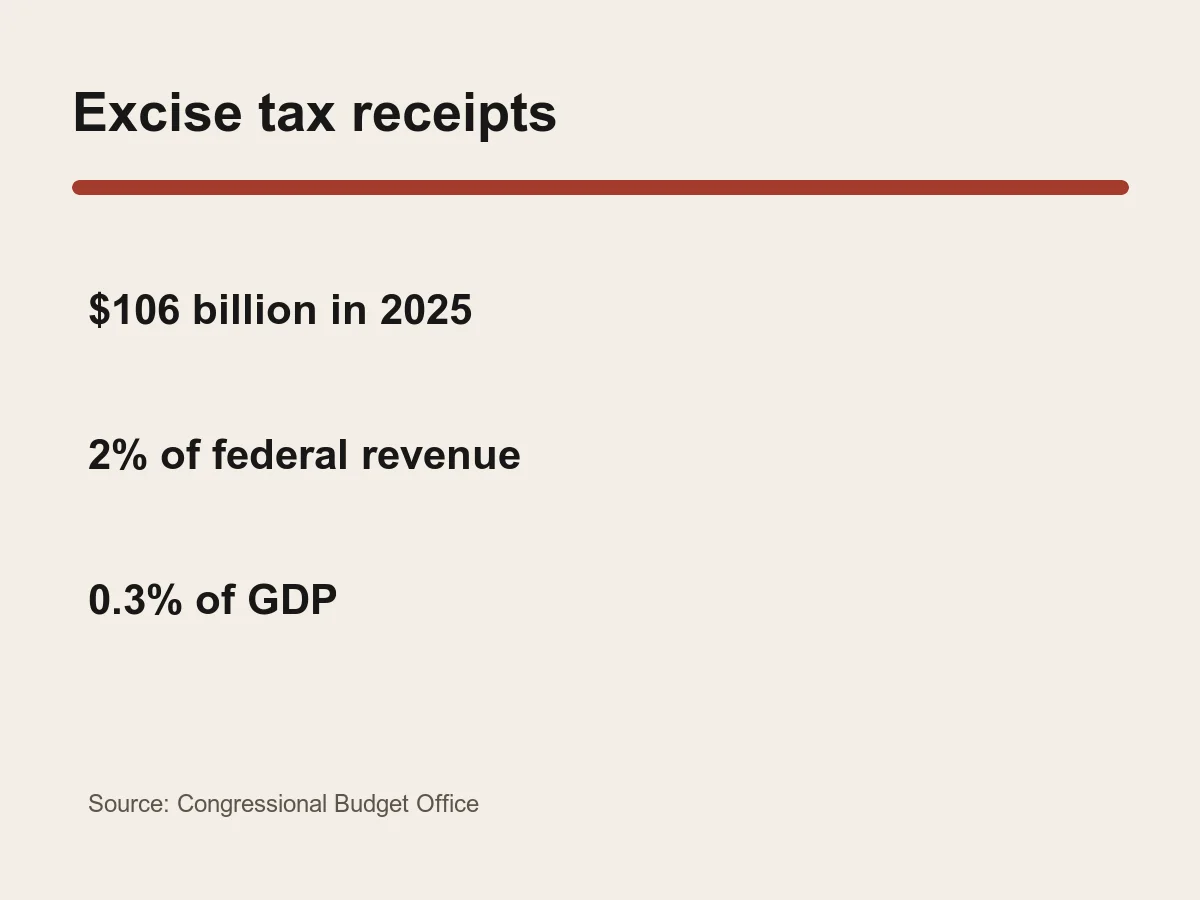
Federal excise taxes generated $106 billion in 2025, about 2% of all federal revenue and 0.3% of gross domestic product, according to a Congressional Budget Office review released Aug. 3.
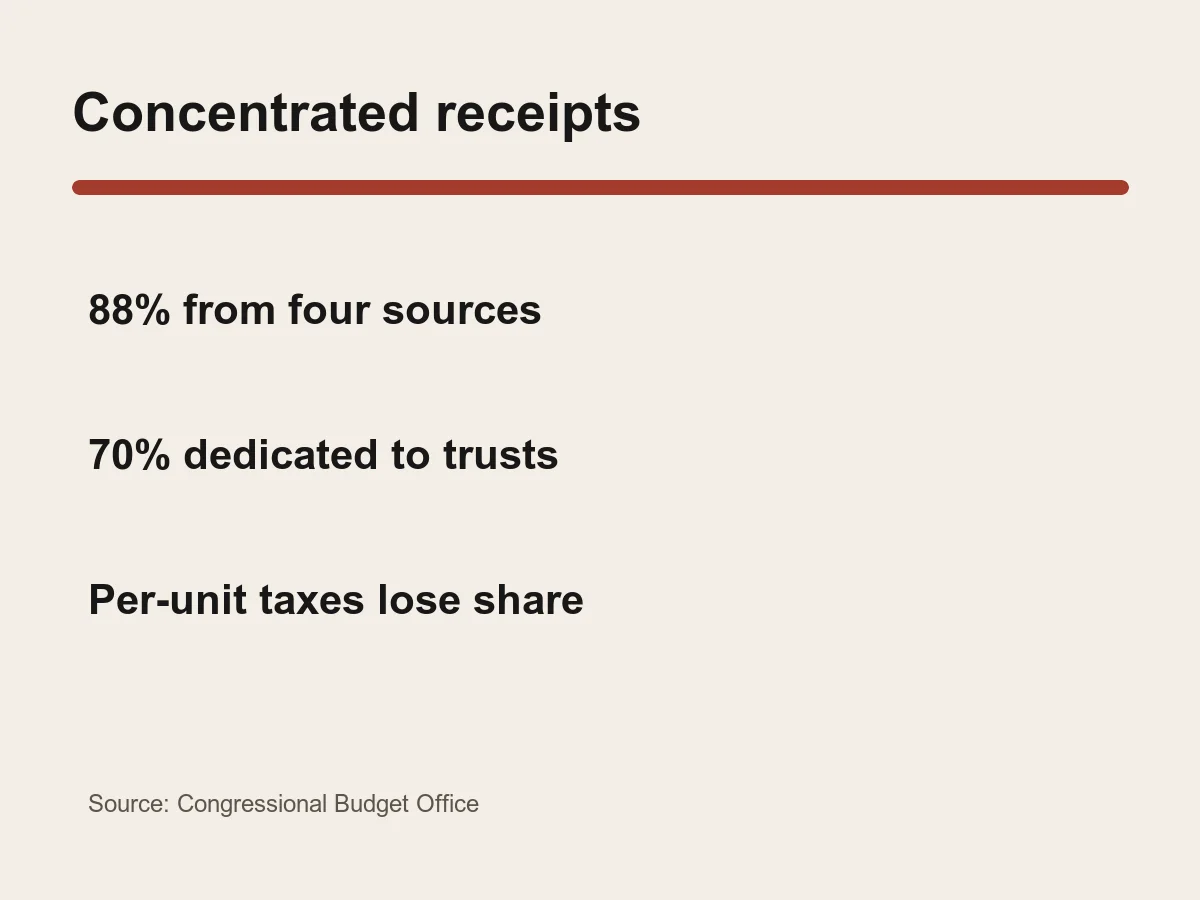
Eighty-eight percent came from four broad sources: highway taxes, mainly on fuel; tobacco and alcohol taxes; aviation taxes; and the 1% tax on stock repurchases by certain publicly traded corporations.
Excise taxes apply to the production or purchase of particular goods and services rather than income. The remainder came from a varied group that includes environmental, communications, insurance and other levies.
About 70% of receipts were dedicated to trust funds. Gasoline and diesel taxes, for example, feed the Highway Trust Fund for road and transit spending; other excise receipts flow to the Treasury's general fund.
CBO projects excise receipts will decline relative to the economy and total federal revenue from 2026 through 2036. A central reason is that several of the largest taxes are fixed per unit and do not automatically rise with inflation.
Under CBO's baseline convention, expiring excise taxes dedicated to trust funds are assumed to continue at their expiring rates through the 10-year projection period. That statutory baseline rule is not a forecast that Congress will enact an extension.
CBO models each tax separately using historical collections and economic or market data for the activity being taxed. Its projections therefore depend on future fuel use, travel, product sales, prices and other behavior.
The $106 billion figure is observed revenue for fiscal 2025. The report's longer-run path is a baseline under current-law conventions, not a revenue target or a policy recommendation.
Changes in law, consumption, technology or economic growth can shift both the amount collected and the finances of trust funds supported by excise taxes.