
Federal courts sentenced 7,245 people under the main prohibited-person firearm statute in fiscal 2025, according to a new United States Sentencing Commission summary.
Those cases represented about 10.9% of the 66,662 federal cases reported to the commission for the year. Section 922(g) prohibits specified categories of people from shipping, transporting, possessing or receiving firearms or ammunition.
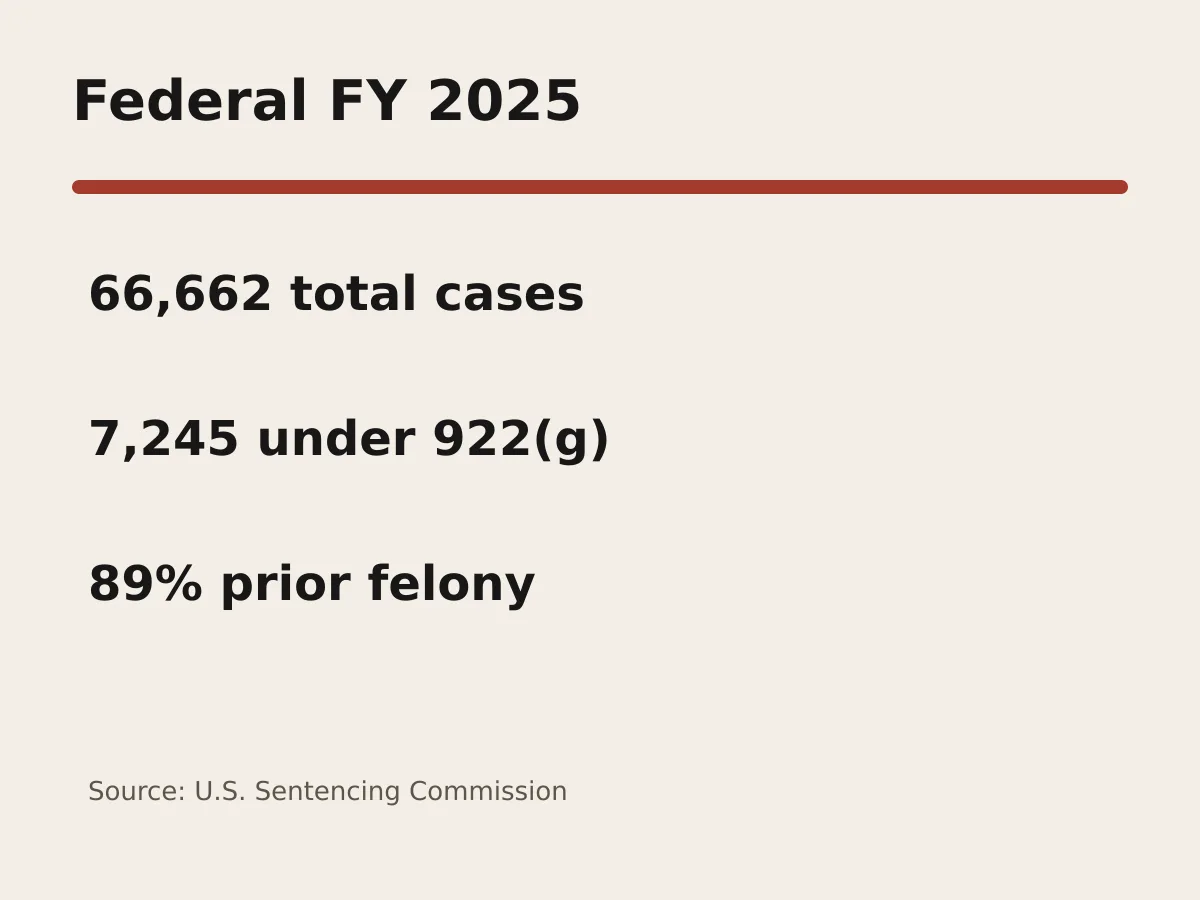
The most common basis was a prior felony conviction: 89% of the Section 922(g) defendants in the dataset were sentenced under that category. The statute also covers other categories defined by federal law.
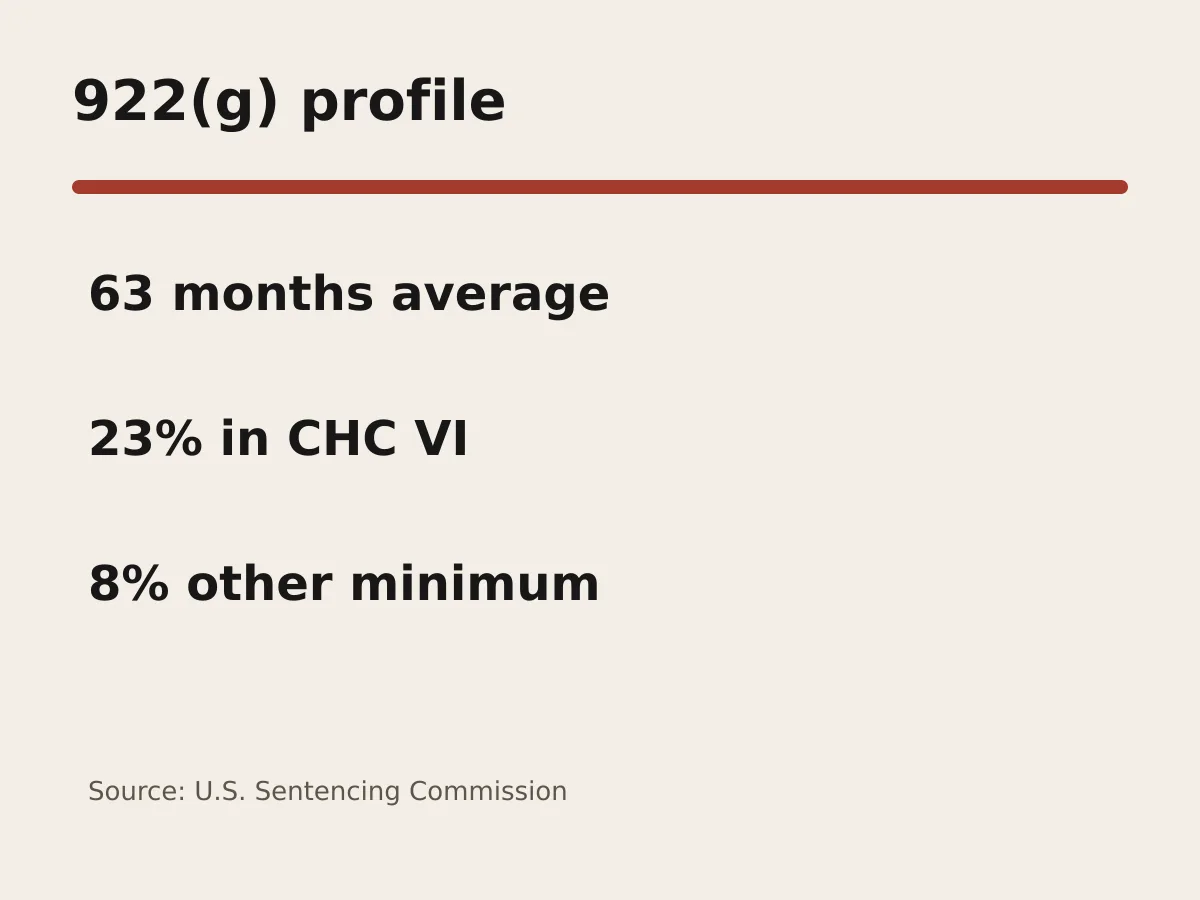
The commission reported an average sentence of 63 months. Sentence length varied with criminal history, conduct, guideline calculations, statutory exposure and case-specific judicial findings.
Twenty-three percent of the sentenced individuals were in Criminal History Category VI, the highest category, while 10% were in Category I. Eight percent were also convicted under another statute carrying a mandatory minimum, most often a drug offense.
The demographic tables say 98% were men, the average age was 37 and 94% were U.S. citizens. Those descriptive figures do not measure offending rates in the general population and should not be used to infer individual conduct.
Commission data cover federal sentencing, not state firearm prosecutions, arrests that did not result in a federal conviction or every gun-related offense. Section 922(g) is one part of the federal criminal code.
The quick-facts series draws on fiscal 2021 through 2025 commission datafiles, allowing year-to-year comparisons, but changes can reflect enforcement patterns, charging practices and case mix as well as underlying conduct.
The 2025 snapshot establishes the scale and profile of federal Section 922(g) sentencing without identifying private defendants or predicting the outcome of any current case.