The Government Accountability Office counted 277 matters for congressional consideration that remained open as of April 9, 2026, spanning health, defense, energy, technology and federal financial management.
GAO has sent Congress more than 1,150 such matters since 2000. Nearly 80% had closed, either because action was taken, circumstances changed or GAO determined the recommendation was no longer applicable.

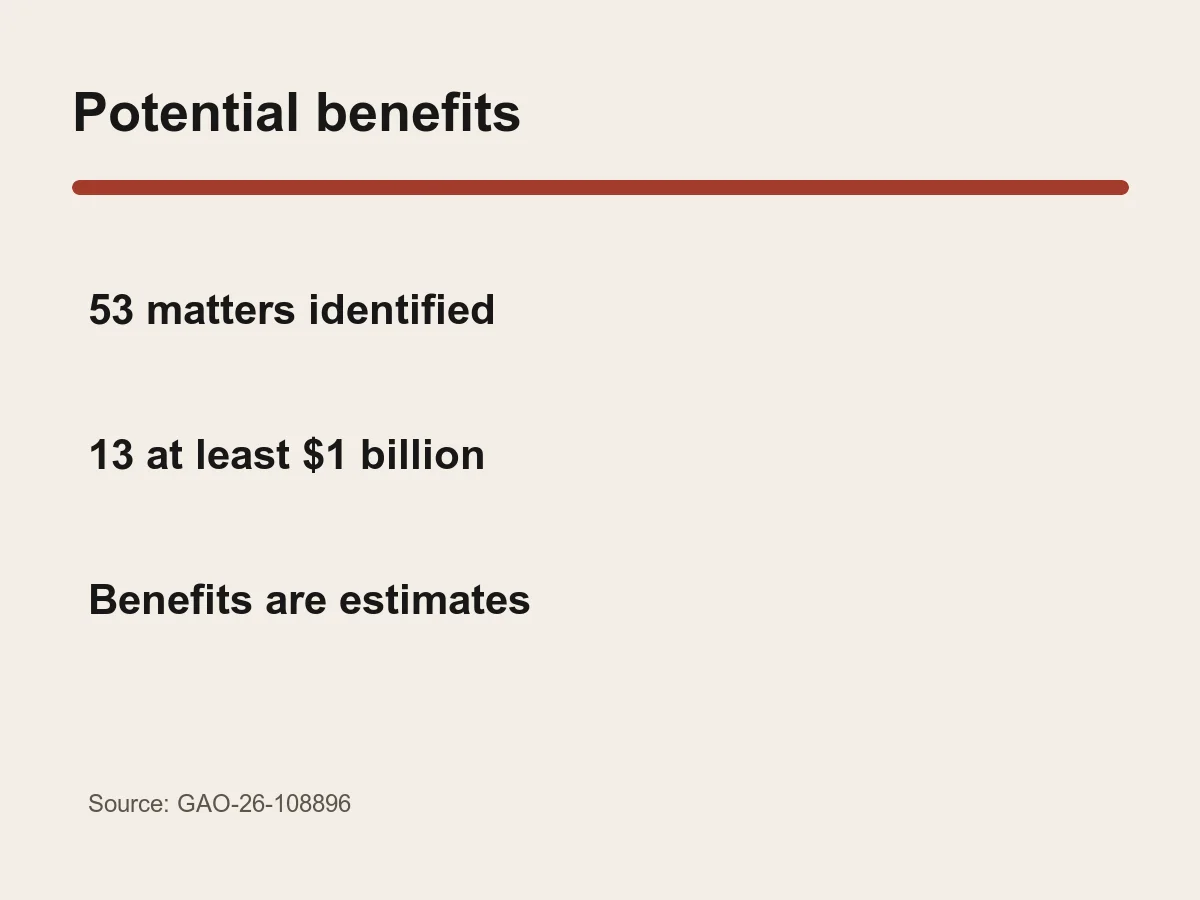
Of the open matters, GAO identified 53 that could produce financial benefits. Thirteen each carried potential benefits of at least $1 billion, although those figures are estimates and depend on the scope and timing of legislation.
The largest example in the report is a recommendation to equalize certain Medicare payment rates across care settings. GAO estimated that policy could save $156.9 billion over 10 years.
That estimate is not money already saved or appropriated. Congress would have to define and enact a policy, agencies would have to implement it, and actual effects could differ from the modeled amount.
Bills introduced in the 118th and 119th Congresses would have fully or partly addressed 103 of the 277 open matters, about 37%, as of February. Introduction alone does not mean a bill will advance or become law.
Age varies across the inventory. GAO said 123 open matters, about 44%, had been open five years or less, while the oldest was almost 25 years old and concerned federal food-safety oversight.
GAO previously attributed $66 billion in financial benefits from fiscal 2001 through March 2024 to addressing matters where Congress was a contributing entity. That retrospective measure uses a different period from the forward-looking estimates in the new inventory.
The useful accountability test is matter by matter: whether relevant legislation advances, whether the final text addresses GAO's finding and whether later budget or program evidence confirms the projected benefit. The headline count alone does not establish achievable savings.