
Fifteen Government Accountability Office recommendations for the Department of Veterans Affairs' disability-compensation program remained open in July, as VA explored artificial intelligence and other technology changes for processing claims.
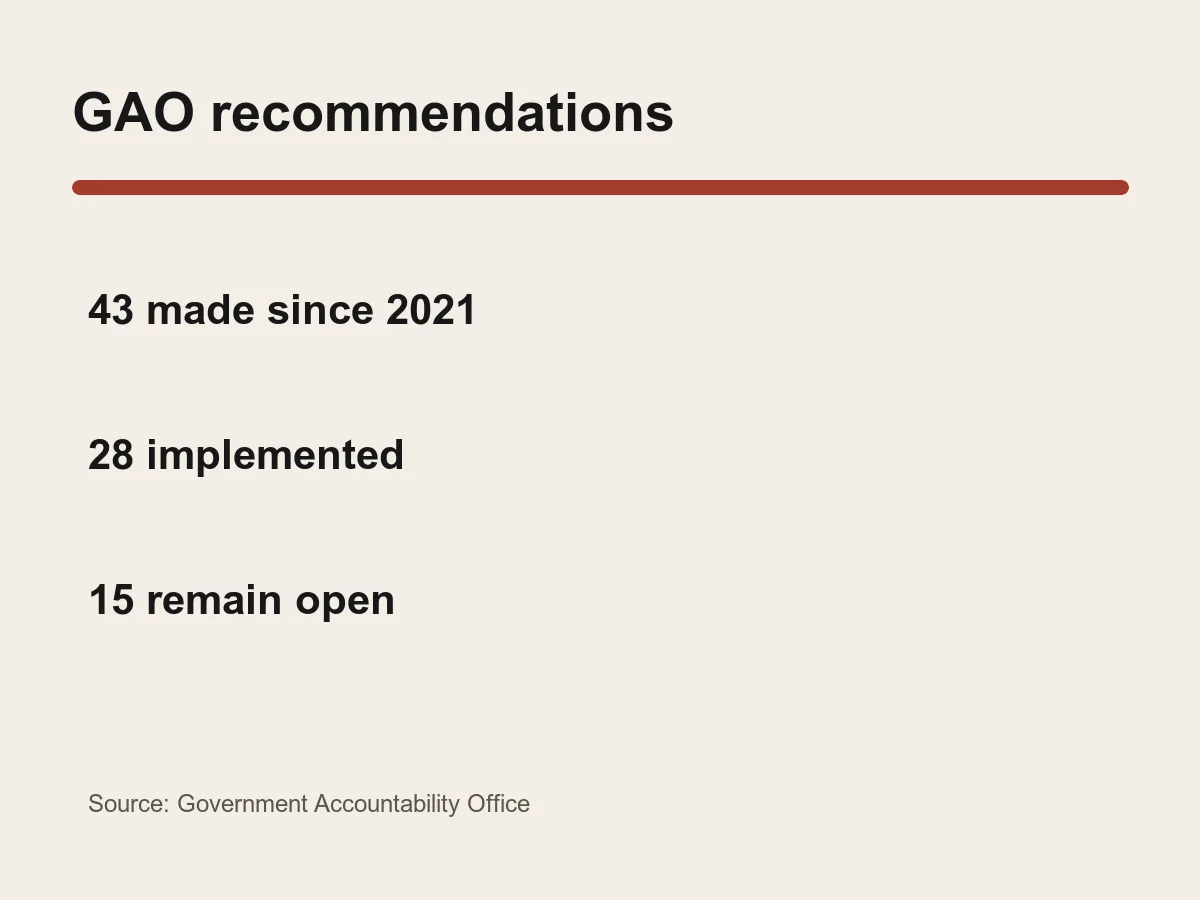
Since 2021, GAO has made 43 recommendations on the program. VA had implemented 28 and taken some steps on the remaining 15, the watchdog told a House Veterans' Affairs subcommittee.

The program provided more than $195 billion to more than 6.9 million veterans and family members in fiscal 2025. Its scale makes processing speed, accuracy and explainability material to both claimants and federal spending.
VA began developing the electronic Veterans Benefits Management System in 2009. GAO said that effort lacked robust planning and did not include goals for response time or user satisfaction, limiting the agency's ability to measure progress.
The watchdog has also found gaps in VA oversight of exams performed by contracted medical providers and in management of training for claims processors. Those are program-management issues independent of whether AI is added.
VA is considering AI to automate more claims-processing work. GAO said that could improve efficiency and accuracy, but opaque model behavior can make errors or misuse harder to detect.
Generative AI can also require significant computing and technical resources. A successful pilot therefore would need evidence on accuracy, cost, processing time, appeals and whether results differ across claim types or claimant groups.
GAO pointed VA to its AI Accountability Framework for governance, data, performance and monitoring. The testimony did not approve a specific AI product or say automated decisions should replace human review.
The next accountability checkpoints are implementation of the 15 open recommendations and published performance measures for any modernization. Faster processing alone would not establish improvement if error, appeal or user-satisfaction outcomes deteriorate.