Austria's economy is expected to grow 0.6% in 2026 as higher energy prices weigh on household consumption, the International Monetary Fund said after its annual policy review.
The country emerged from a two-year recession with 1.0% growth in 2025. The IMF expects the recovery to continue, but more slowly than before the latest energy-price shock.
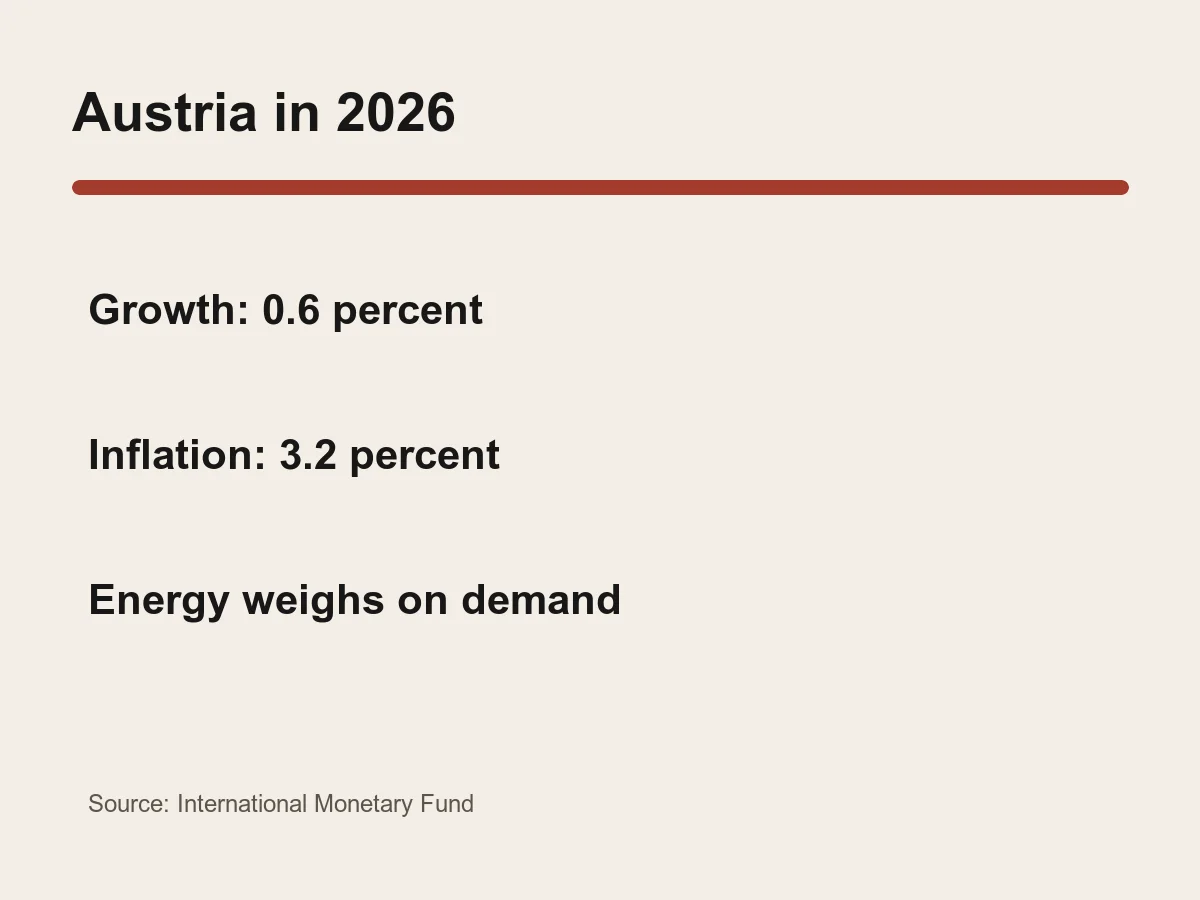
Headline inflation reached 3.8% in May after gasoline pump prices rose roughly 20% from a year earlier. The fund projects inflation averaging 3.2% in 2026 before gradually moving toward the euro-area average.
The IMF expects stronger growth in 2028 and 2029 as inflation moderates and household saving patterns normalize. It then sees potential growth easing toward about 0.8% by 2031, below the previous decade's 1.2% average.
Austria's deficit reached 4.6% of GDP in 2024, leading to an EU excessive-deficit procedure. The government aims to bring the deficit to 3% in 2028.
The fund called that target appropriately ambitious but said the announced measures may not be sufficient. Backward-looking indexation of wages and social benefits has made near-term consolidation more gradual.
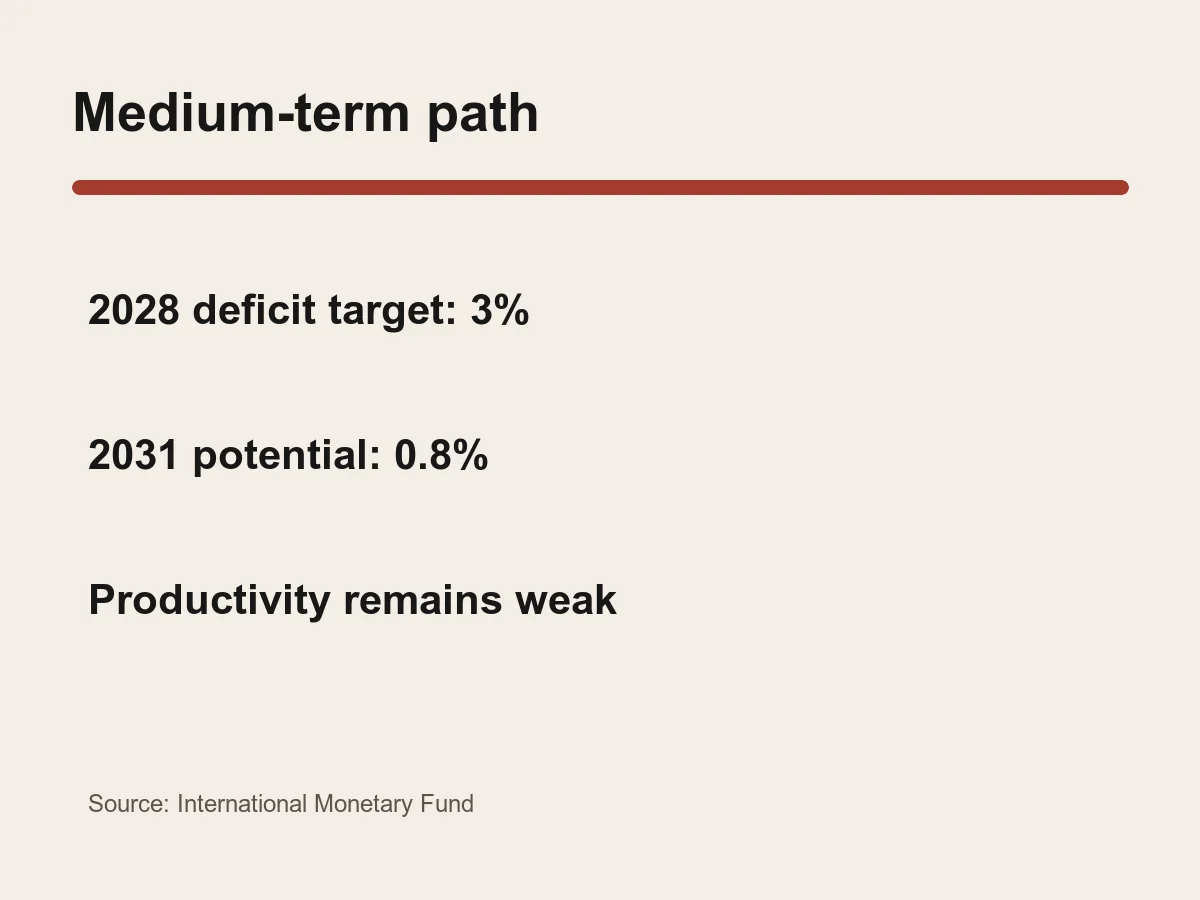
IMF directors emphasized productivity reforms, labor supply and careful sequencing of fiscal measures. Austria's shrinking workforce and weak productivity growth are central constraints in the medium-term outlook.
The forecast is conditional, not a guaranteed result. Energy supply disruptions, external competition and wider geopolitical developments could weaken growth or keep inflation higher, while stronger investment or productivity could improve the path.
The Article IV assessment therefore describes a narrow recovery with limited room for error: positive growth continues, but energy costs, fiscal adjustment and slow productivity leave Austria below its recent potential.