
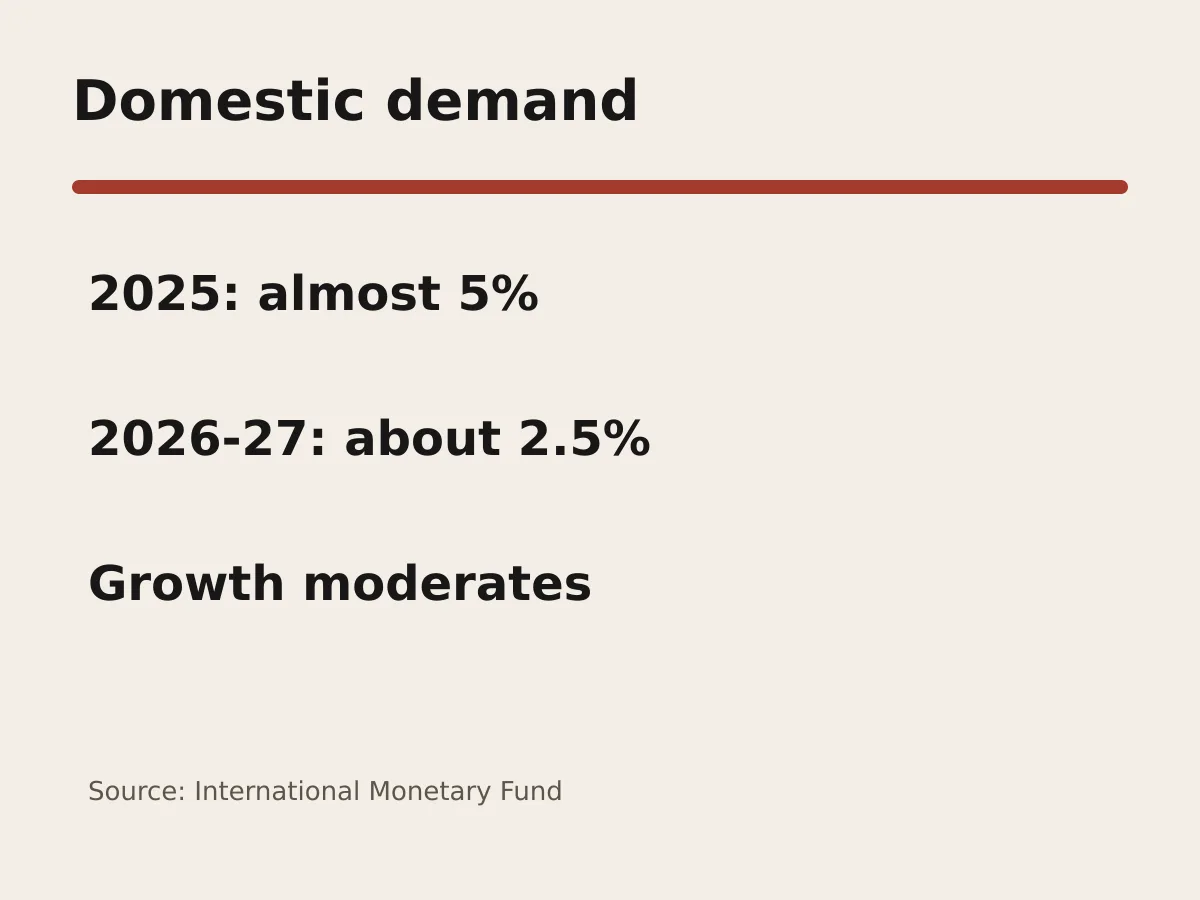
Ireland's domestic economy is expected to slow while remaining resilient, with modified domestic demand growth easing from almost 5% in 2025 to about 2.5% in 2026 and 2027, the International Monetary Fund said.
Modified domestic demand is closely watched in Ireland because headline gross domestic product can be heavily affected by multinational-company activity. The IMF said consumption and investment supported strong 2025 growth.
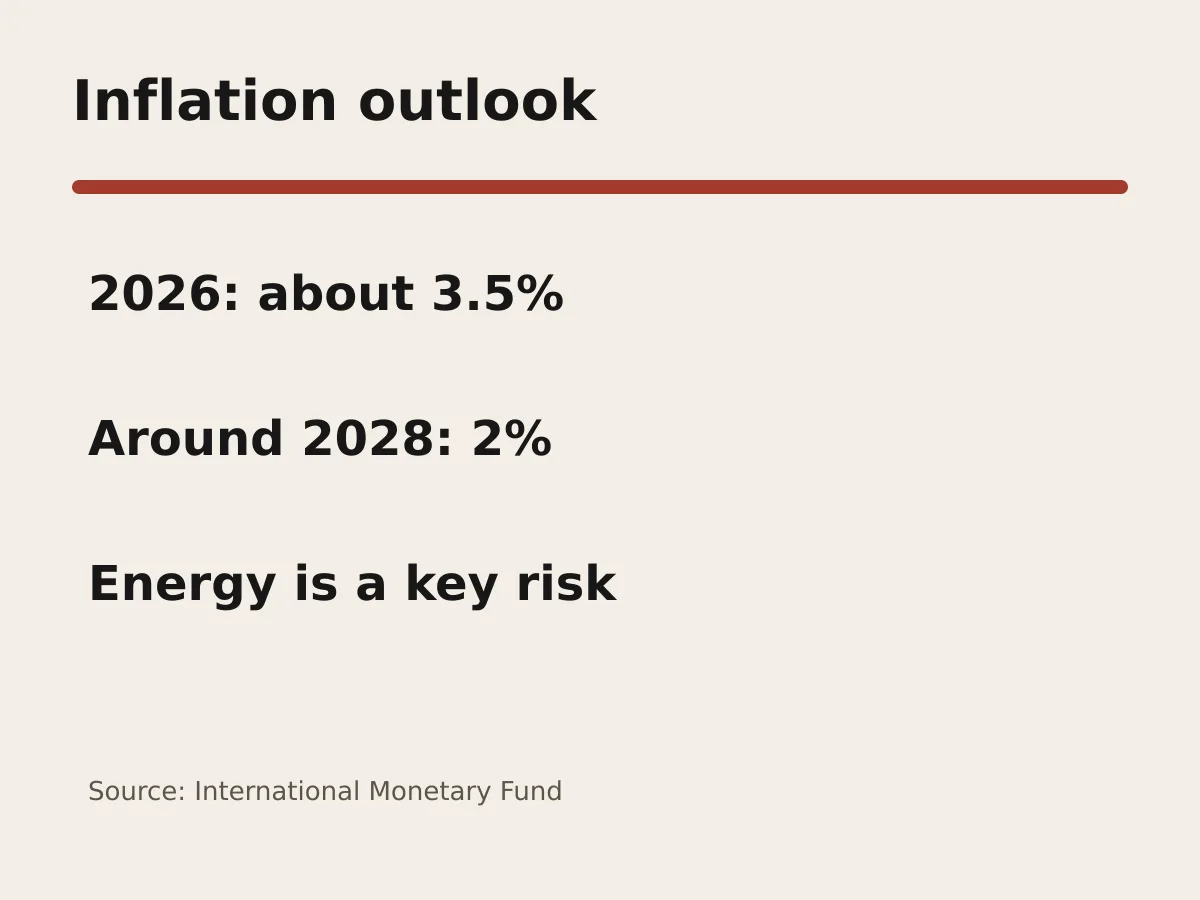
Headline inflation stayed near 2% in 2025 but has accelerated with higher energy prices. The fund projects inflation at about 3.5% in 2026 before returning to 2% around 2028.
Ireland's government balance remained in a sizable surplus in 2025, supported by strong corporate income-tax receipts from multinational enterprises. The same concentration is a vulnerability if company profits, tax rules or investment patterns shift.
The fund said export growth is expected to slow significantly in 2026 and the current-account surplus should moderate over the medium term. It assessed risks to growth as tilted down and risks to inflation as tilted up.
Policy recommendations include broadening the tax base, controlling current-spending growth, improving budget credibility and using public investment efficiently rather than assuming unusually strong corporate-tax receipts will persist.
The IMF also urged Ireland to boost housing supply, improve energy security, prepare workers for the AI transition and continue integrating with the European Union energy market.
The projection is conditional on assumptions about energy prices and the global economy. A longer geopolitical shock, sharper trade fragmentation or changes affecting multinational firms could produce materially different outcomes.
The central message is a window rather than a guarantee: Ireland's current fiscal and economic strength creates room to address housing, energy and productivity constraints before external risks become harder to absorb.