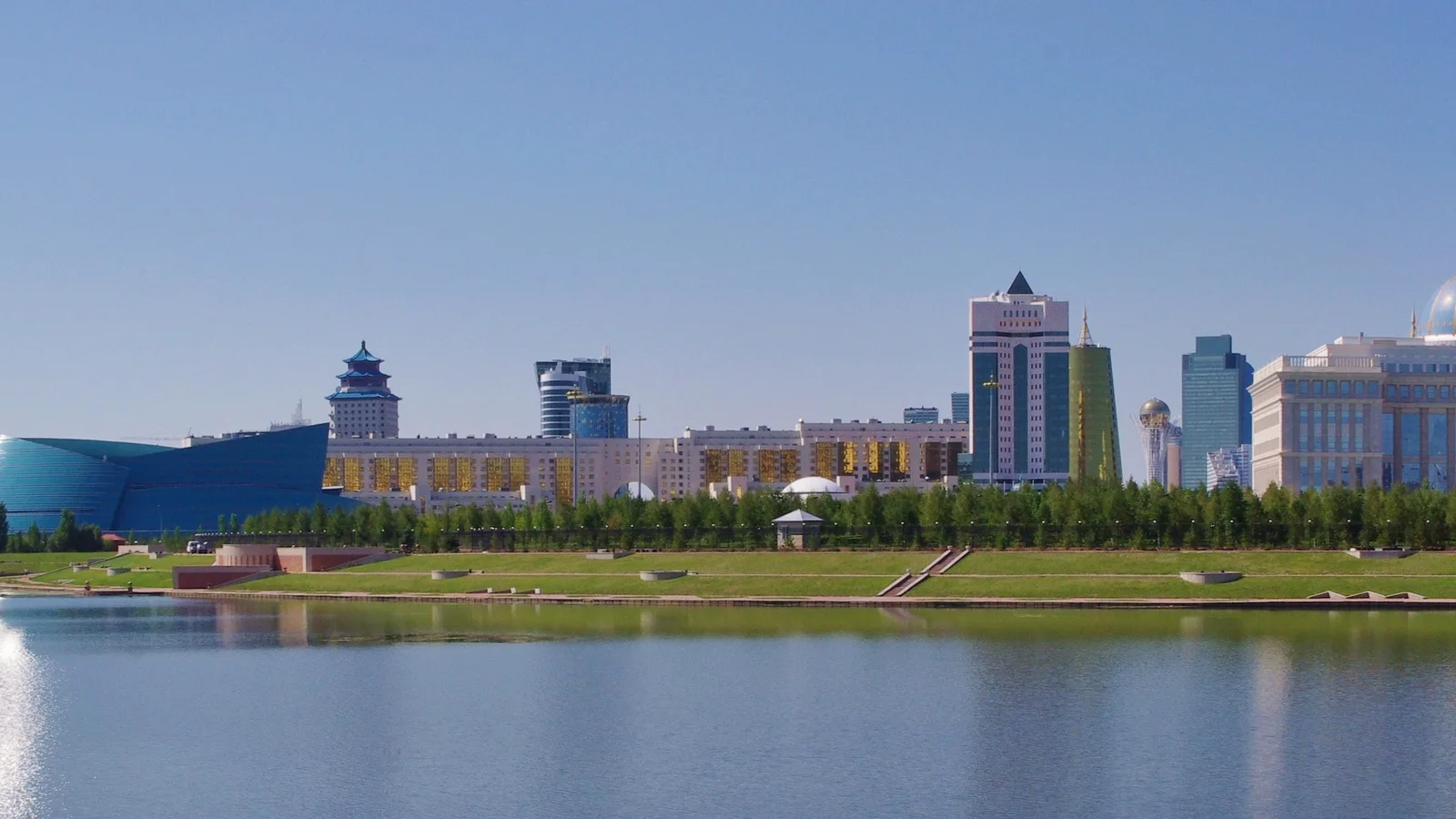
International Monetary Fund staff projects Kazakhstan's economy will grow about 4.6% in 2026, while inflation remains around 10% and well above the central bank's 5% target.
Real GDP expanded 3.7% in the first five months of 2026, down from 6.5% at the end of 2025. IMF staff attributed the moderation partly to lower oil production after an accident affecting the Caspian Pipeline Consortium.
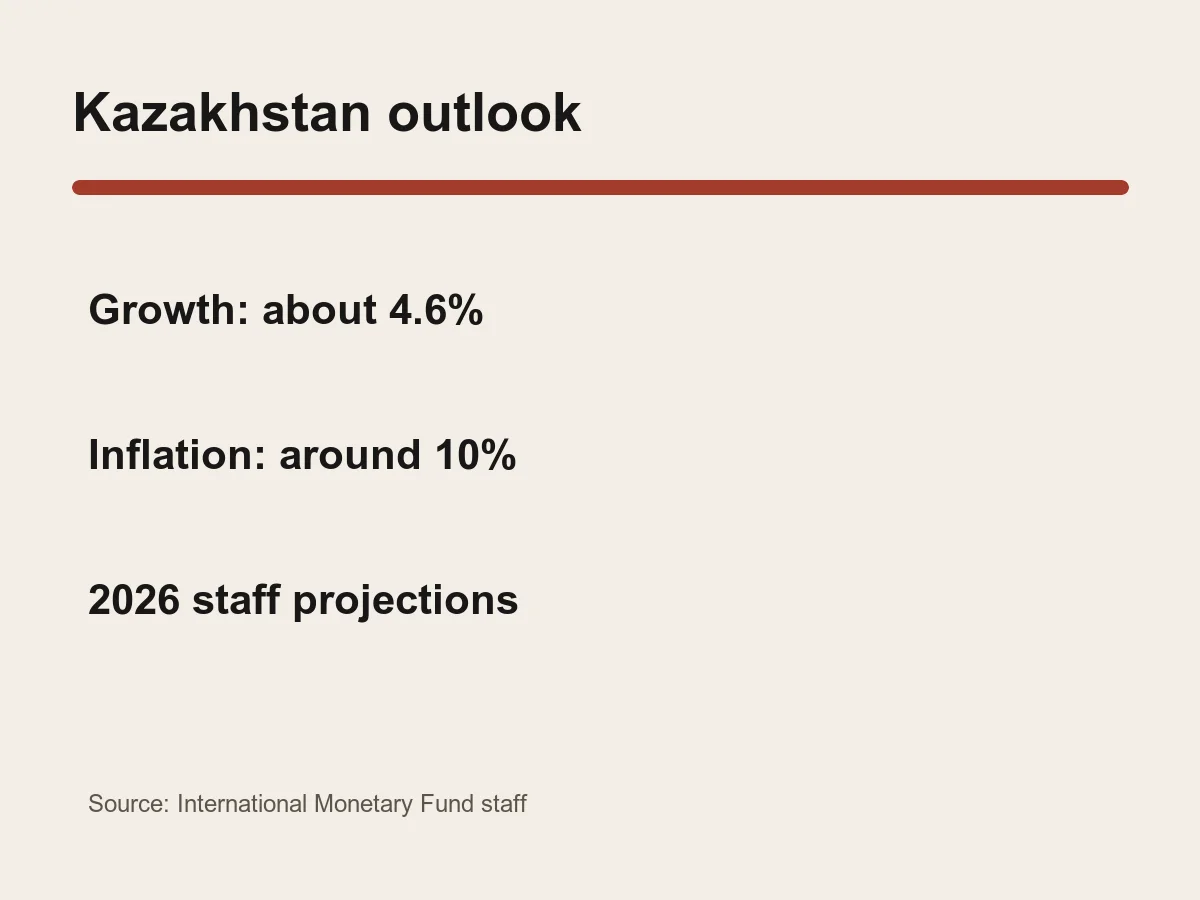
Services, transport, construction and manufacturing helped offset lower oil output. The 4.6% full-year projection assumes elevated oil prices counter slower household credit growth, stable oil output and fiscal consolidation.
Annual inflation fell from 12.9% in September 2025 to 10.4% in May 2026. The National Bank of Kazakhstan reduced its policy rate by 100 basis points in June after the decline and tighter liquidity.
IMF staff said monetary policy should stay tight until inflation is firmly moving toward target. Utility-price adjustments, external price pressure and faster quasi-fiscal or capital spending could push inflation higher.
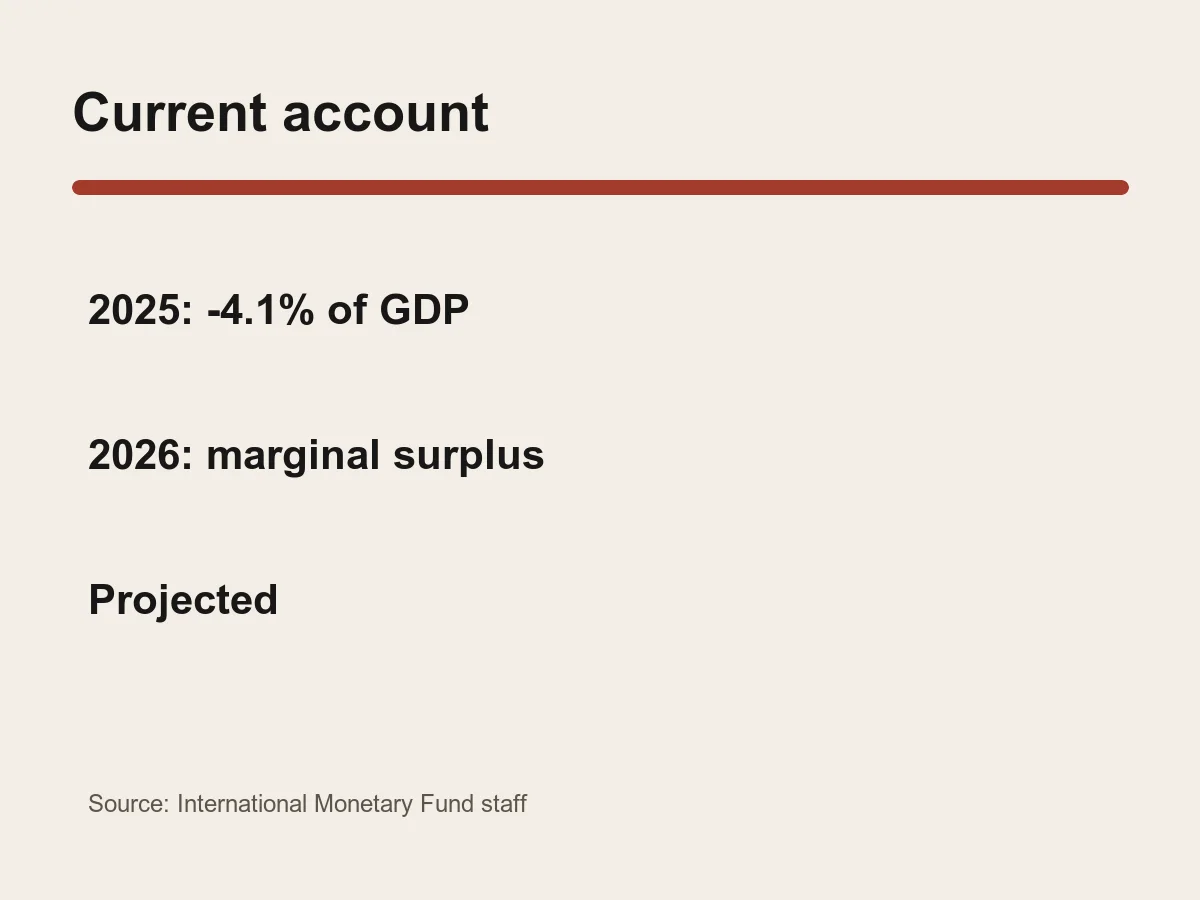
The current account is projected to shift from a deficit equal to 4.1% of GDP in 2025 to a marginal surplus in 2026 as stronger exports offset public-investment-related imports.
International reserves cover about 10 months of imports, according to the staff statement. The banking sector was described as well capitalized, liquid and profitable overall, with low, provisioned nonperforming loans.
Risks run in both directions. Strong domestic demand or higher import prices could reignite inflation, while global uncertainty, tighter financial conditions or pipeline disruption could weaken growth; sustained oil prices could strengthen buffers.
These are preliminary staff findings after a June 3-12 visit, not a decision by the IMF Executive Board. The next tests are official growth and inflation data, fiscal execution and whether policy keeps price growth on a durable path toward target.