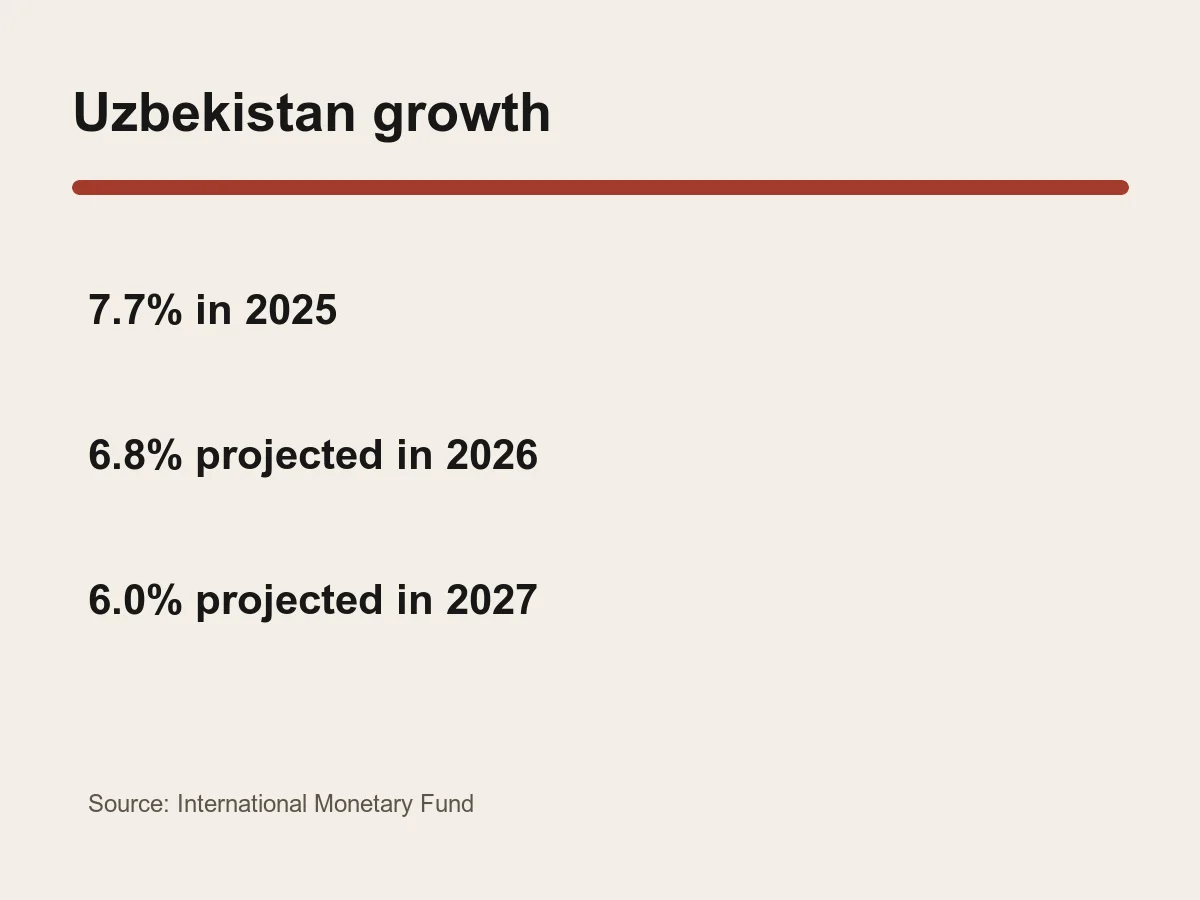
Uzbekistan's real economy is projected to grow 6.8% in 2026 and 6.0% in 2027, according to the International Monetary Fund's latest review.
The forecast represents moderation after 7.7% growth in 2025. Activity remained strong at the start of this year, with gross domestic product up 8.7% from a year earlier in the first quarter.
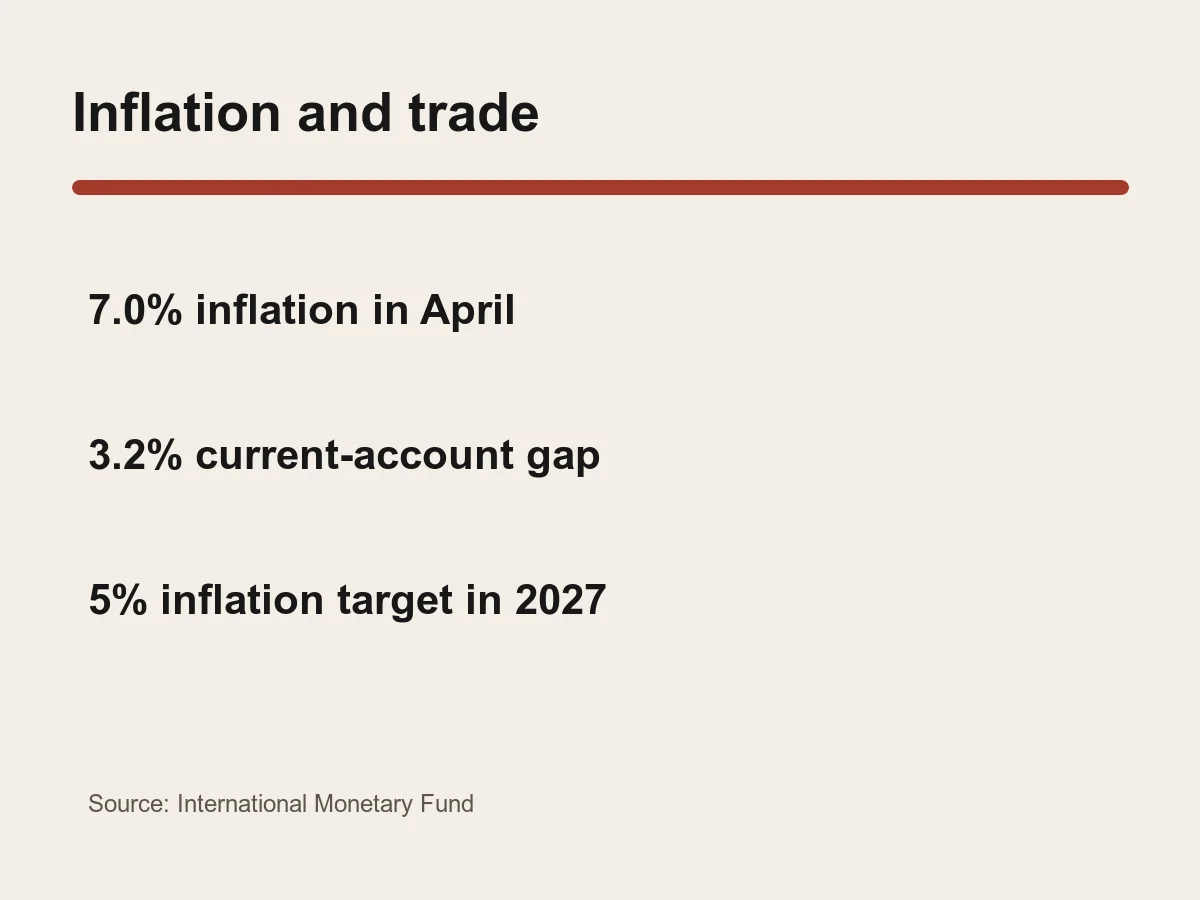
Inflation eased to 7.0% year over year in April 2026 after price pressures associated with the May 2024 energy-price reform. The IMF expects inflation to reach the Central Bank of Uzbekistan's 5% target by the end of 2027.
The consolidated fiscal deficit narrowed to 2.1% of GDP in 2025. Strong activity and high gold prices supported government finances, while remittances and non-gold exports helped reduce the current-account deficit to 3.9% of GDP.
The fund projects the current-account deficit will narrow again to 3.2% of GDP in 2026. International reserves are expected to exceed 12 months of imports by year-end.
Private consumption, investment and continued structural reforms underpin the baseline growth forecast. IMF directors said monetary policy should remain restrictive enough to prevent inflation from stalling above target.
The review also urged fiscal restraint to avoid adding to demand pressures and called for stronger budgeting, public-investment management and oversight of state-owned enterprises and public-private partnerships.
Downside risks include weaker global demand, lower export prices, tighter financial conditions, procyclical spending and delays in structural reforms. Faster reform implementation could produce an upside surprise.
The projections are a baseline, not a guarantee. Uzbekistan's exposure to gold prices, remittances, external demand and domestic credit policy can move growth, inflation and the external balance away from the IMF path.