The Library of Congress trained 90 educators to use primary sources in classrooms through its 2026 Summer Teacher Institute, selecting them from a pool of nearly 200 applicants.
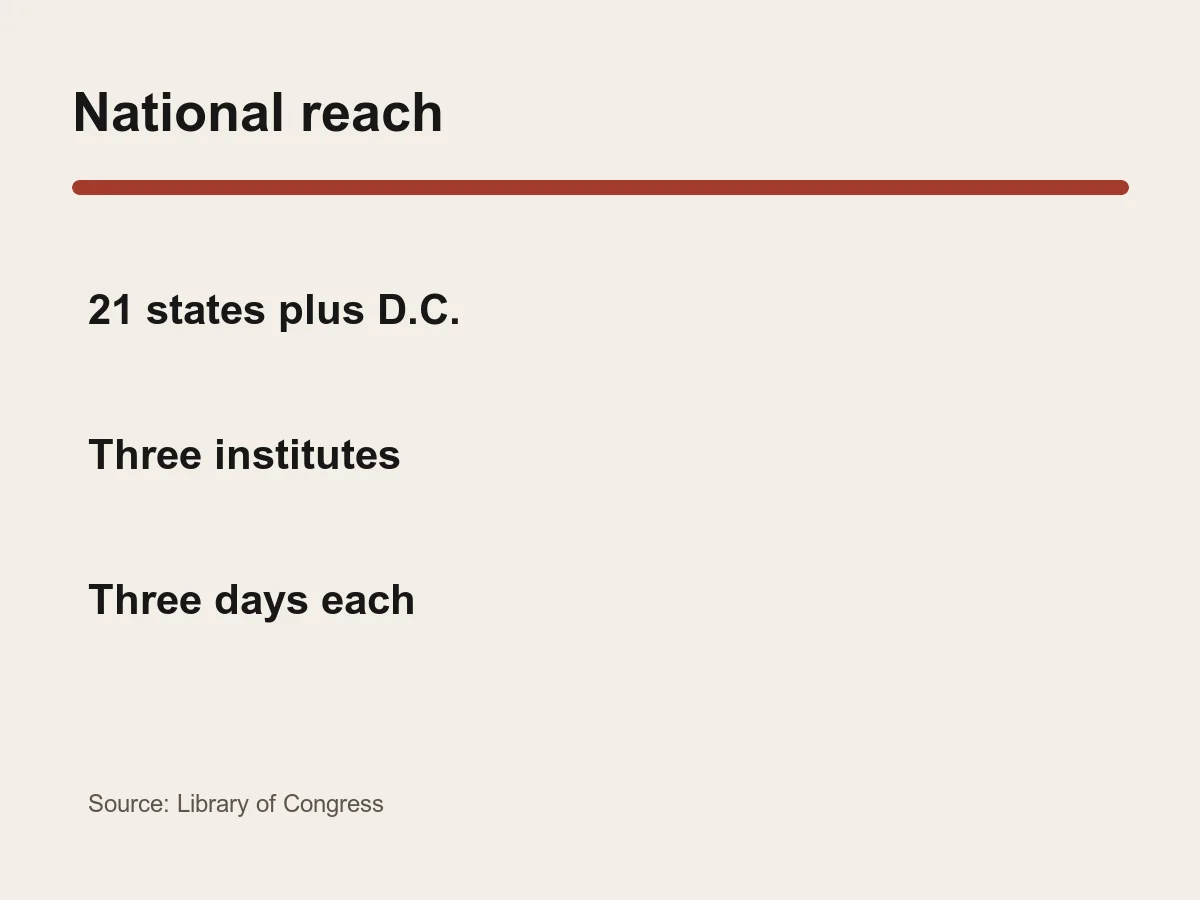
Participants represented 21 states and the District of Columbia. The Library held three institutes in Washington, each organized as a three-day program.

The institutes are part of the Teaching with Primary Sources program. Library education specialists and subject experts worked with participants on methods for examining historical artifacts and documents.
The practical aim is classroom transfer: educators develop primary-source teaching strategies they can use in their own districts and share with colleagues.
The Library describes primary-source analysis as a way to prompt questions, critical thinking and evidence-based knowledge construction. The institutes exposed participants to millions of digitized items available through loc.gov.
The cohort extended beyond classroom teachers. It included school library media specialists, administrators, public librarians and educators working across K-16 settings.
The participating institutions ranged from large metropolitan systems to smaller rural districts. The public list included schools and libraries from Alabama to Washington and Wisconsin.
The release documents reach and selection, not an evaluation of student outcomes. It does not report a control group, classroom achievement measures or a long-term follow-up of teachers.
The next evidence of impact will be whether participants publish or share lesson materials, train colleagues and document how students use the Library's primary sources after returning to their communities.