The Federal Reserve's Main Street Lending Program still held 251 loans beyond their initial maturity dates as of Jan. 5, 2026, according to a Government Accountability Office review.
The emergency program made 1,830 loans totaling $16.6 billion to eligible small and midsize businesses during the COVID-19 pandemic. The Federal Reserve Bank of Boston administers the portfolio for the central bank system.
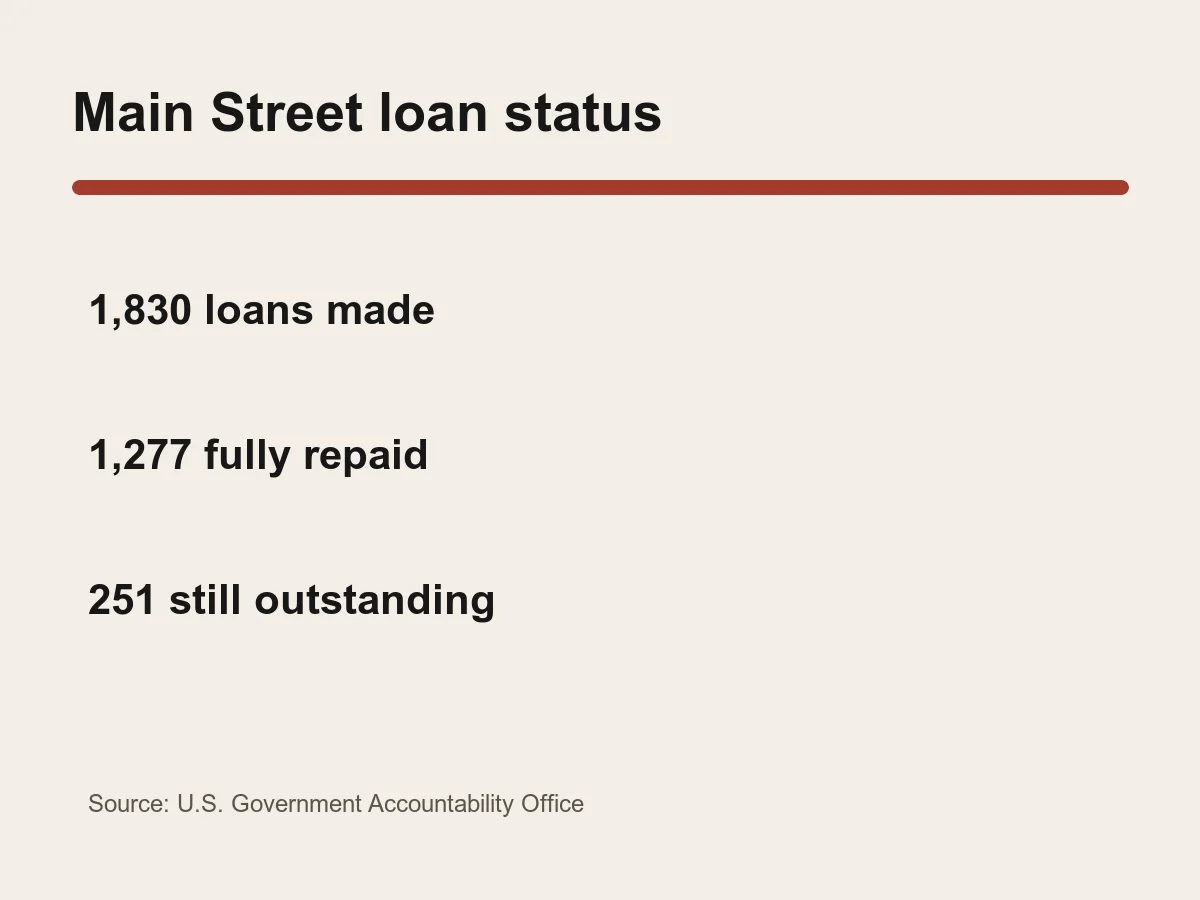
Seventy percent of the loans, or 1,277, had been fully repaid by the January snapshot. The 251 loans remaining beyond their initial maturity represented nearly 14% of the total; the other 16% had resulted in losses, GAO said.
The portfolio had charged off $1.3 billion in loan amounts. It also had sold $1.4 billion in authorized loan amounts back to lenders at a net loss under arrangements used to resolve distressed credits.
Main Street stopped purchasing new loan participations in January 2021, but servicing and resolution continue because some borrowers received modifications and some loans remained unresolved after their original terms ended.
GAO examined the Boston Fed's administration of the program and the Federal Reserve Board's oversight. The review followed earlier work identifying 20 opportunities to improve internal controls over lending, monitoring and reporting.
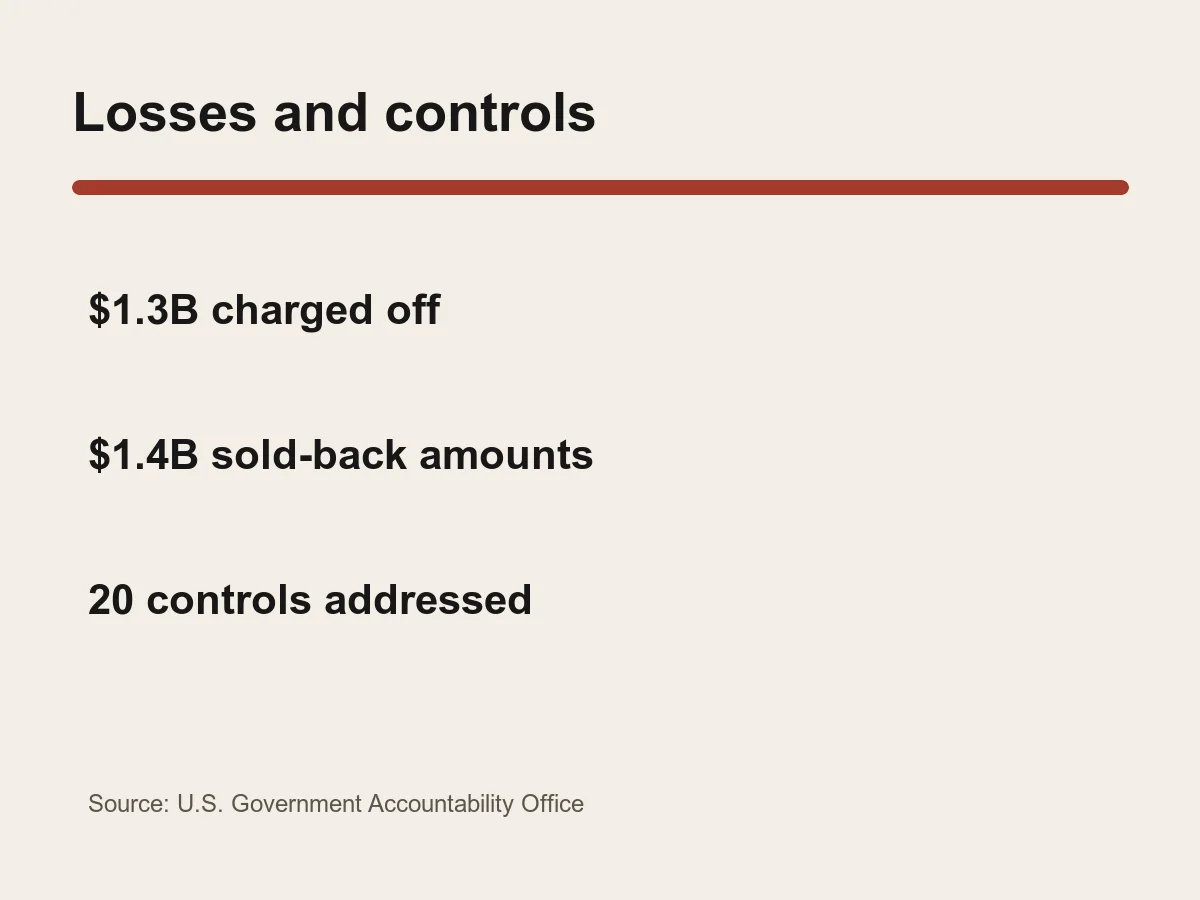
The Federal Reserve and Boston Fed had addressed all 20 control opportunities by the time of the new report, and GAO reviewed the actions taken. The report nevertheless says continued oversight is needed while loans remain outstanding or move through recovery.
The aggregate figures describe the program portfolio, not the financial condition of any named borrower. GAO's public report does not forecast how much of the remaining balance will ultimately be repaid or recovered.
The loan-status counts are a snapshot as of Jan. 5, 2026. Later payments, modifications, sales or charge-offs can change the totals, and outstanding after maturity does not by itself establish a final loss.