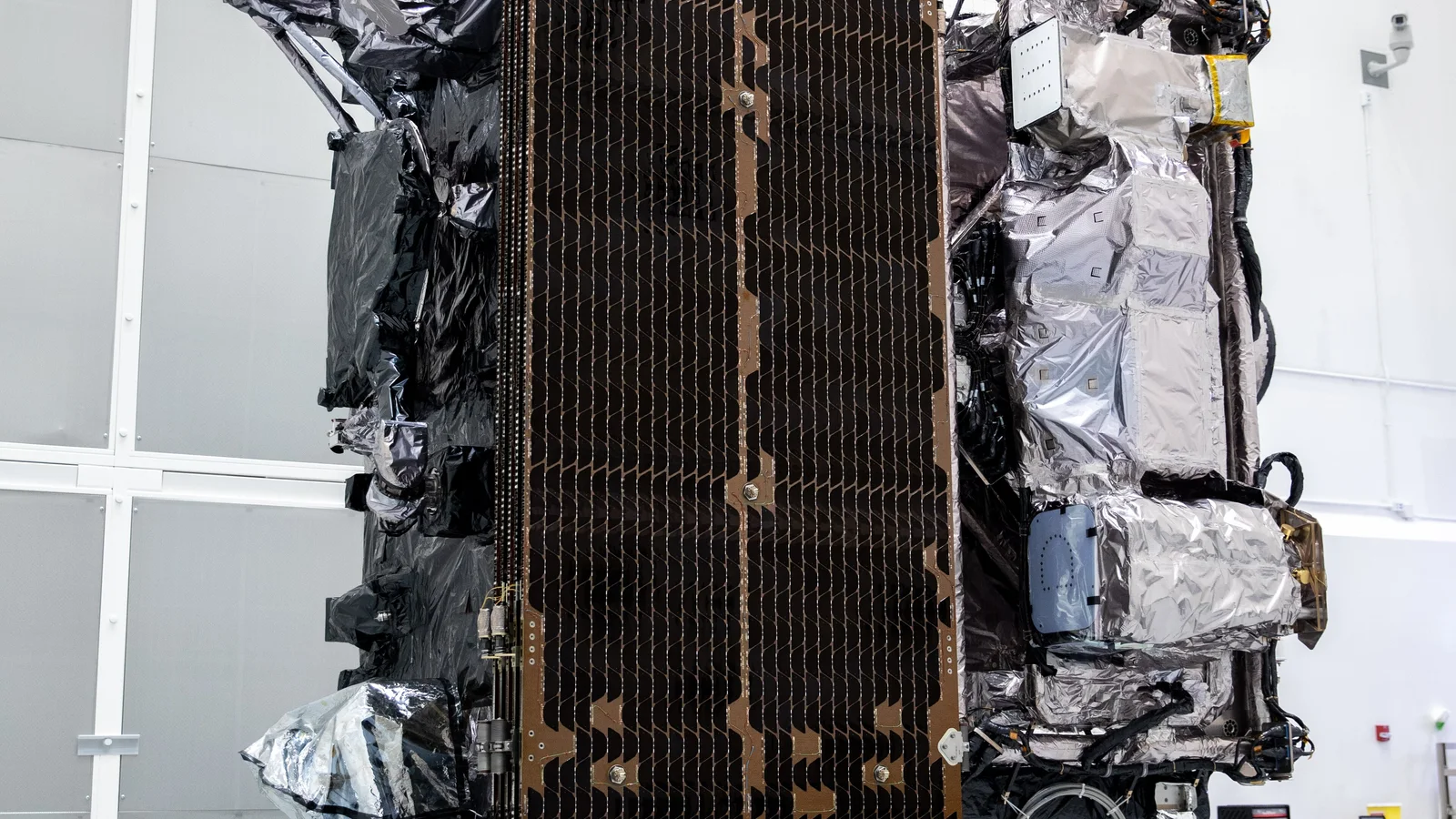
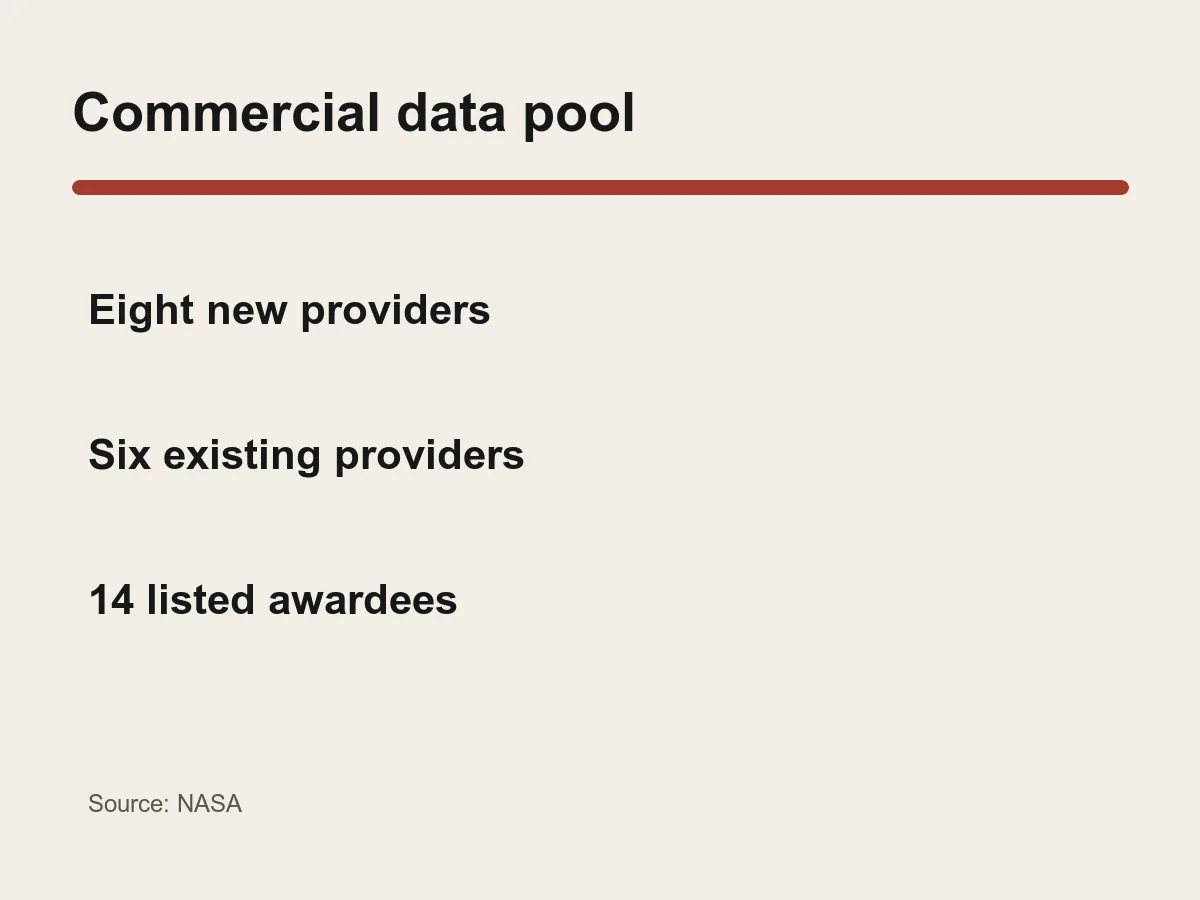
NASA selected eight new companies for its commercial satellite data contract and will buy new products from six existing holders, expanding the program to 14 listed awardees.
The additions are part of the Commercial Satellite Data Acquisition Program's second contract on-ramp. NASA uses commercial measurements to supplement observations from government Earth-science missions.
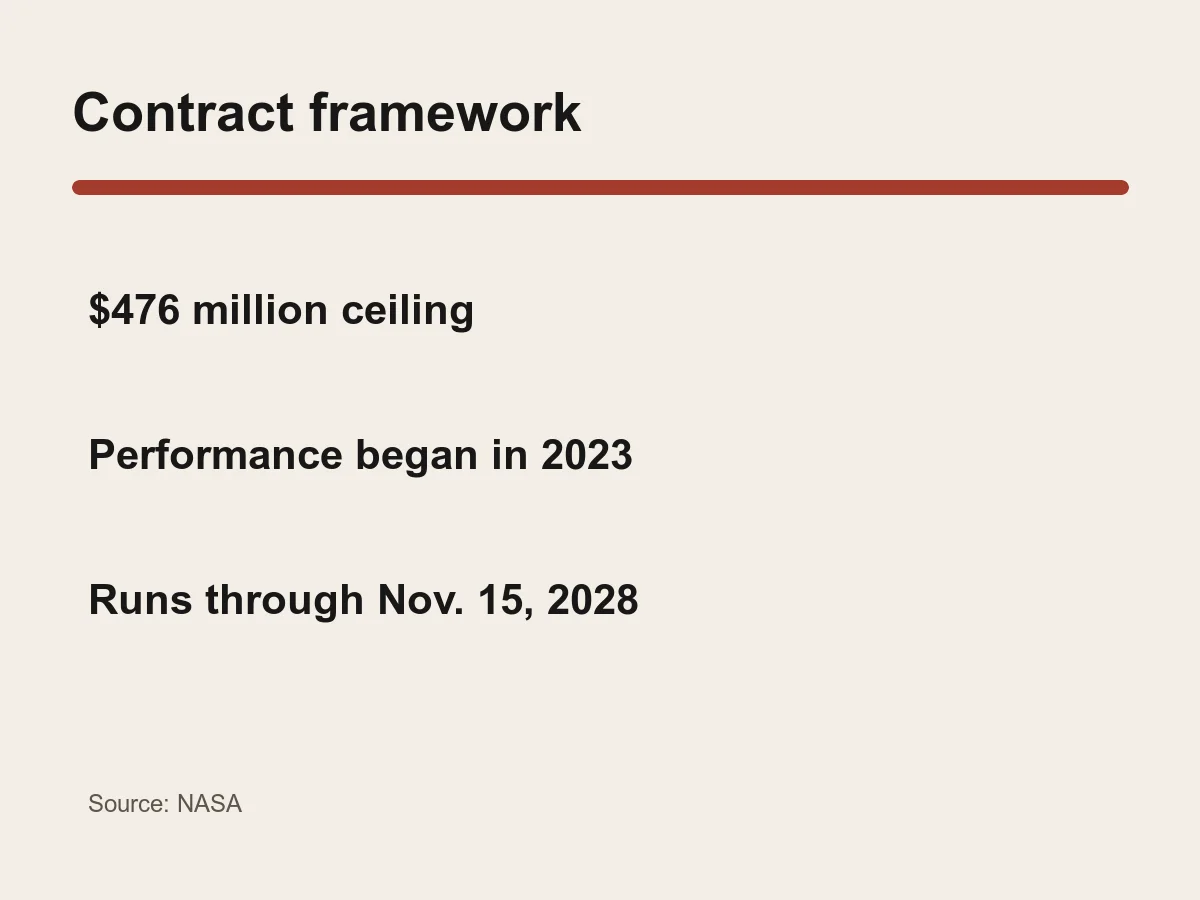
The contract is firm-fixed-price, indefinite-delivery and indefinite-quantity. Its original maximum value is $476 million, and the performance period that began in 2023 runs through Nov. 15, 2028.
The $476 million figure is a contract ceiling, not a new lump-sum award to the eight incoming companies. Actual spending depends on task orders and data purchases under the vehicle.
NASA said commercial sources can add high-resolution and more frequent measurements for researchers, civil agencies and decision-makers. The agency evaluates the data as a complement to its own satellites rather than a replacement for public missions.
The awardee list includes Airbus DS Geo, GHGSat, Hydrosat, ICEYE US, ImageSat International, Kuva US, Muon Space, Orbital Sidekick, OroraTech USA, Planet Labs Federal, PlanetiQ, SATLANTIS US, Tomorrow.io and Wyvern.
Those companies cover different sensing and forecasting capabilities. A broader vendor pool can give NASA more options, but the announcement does not assign identical workloads or guaranteed revenue to each awardee.
NASA describes the program as a way to acquire data cost-effectively and accelerate access for science and public-service uses including environmental intelligence and disaster response.
The next test is delivery: which datasets pass scientific evaluation, how widely they are licensed for research and civil use, and how much NASA orders before the contract period ends.