
NCAA Division I programs can now place additional commercial logos on uniforms, apparel and equipment under a rule that took effect August 1.
The policy permits up to two added commercial logos on uniforms and apparel and one added logo on equipment during preseason and regular-season competition.
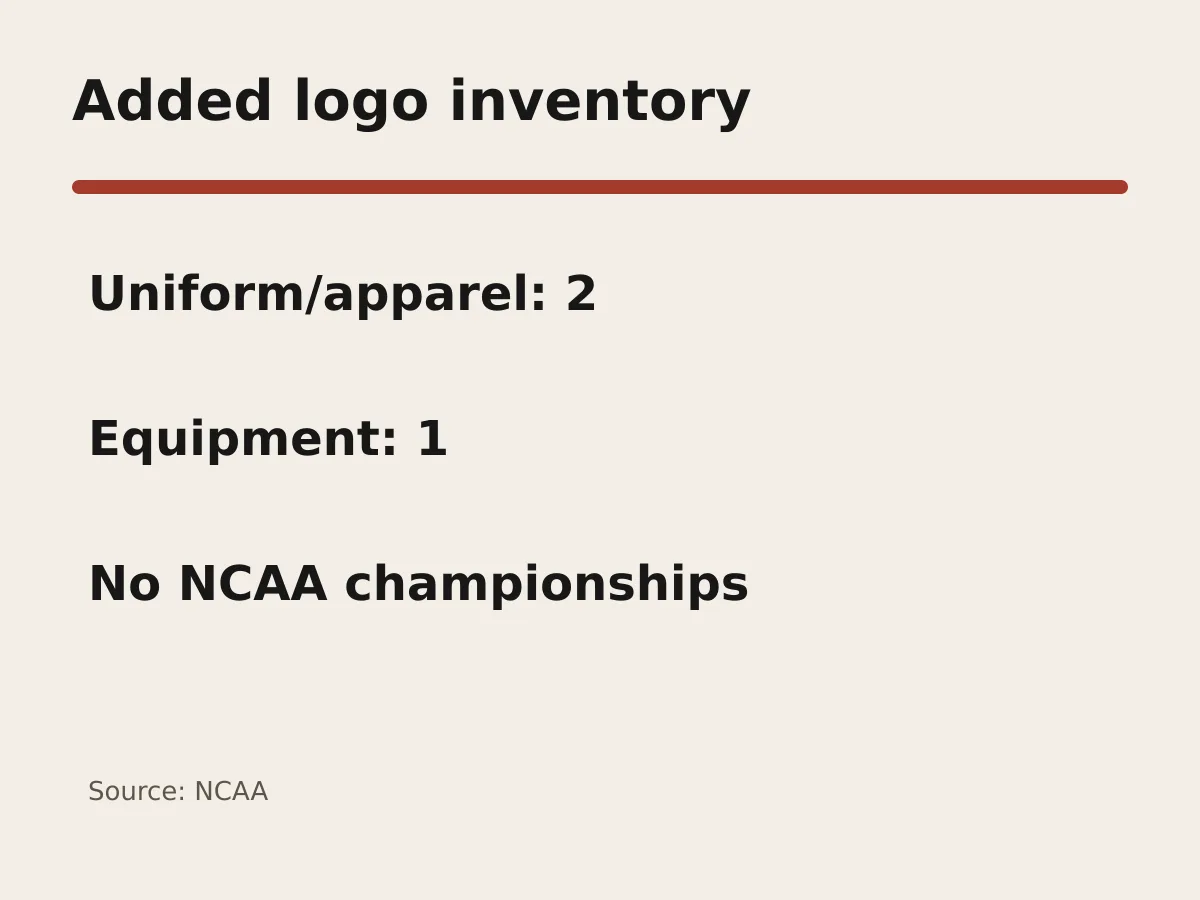
Teams may add one more commercial logo on uniforms and apparel for conference championships. The authorization does not extend to NCAA championship competition.
Each commercial logo is limited to 4 square inches. Playing-rules groups, oversight committees and sport committees are responsible for placement restrictions where logos could interfere with numbers, markings or officiating.
The Division I Cabinet approved the policy in January as schools sought additional revenue sources while expanding direct financial benefits for athletes.
Permission does not require every school or conference to sell every available placement. Institutions can set their own commercial standards within NCAA rules and existing contracts.
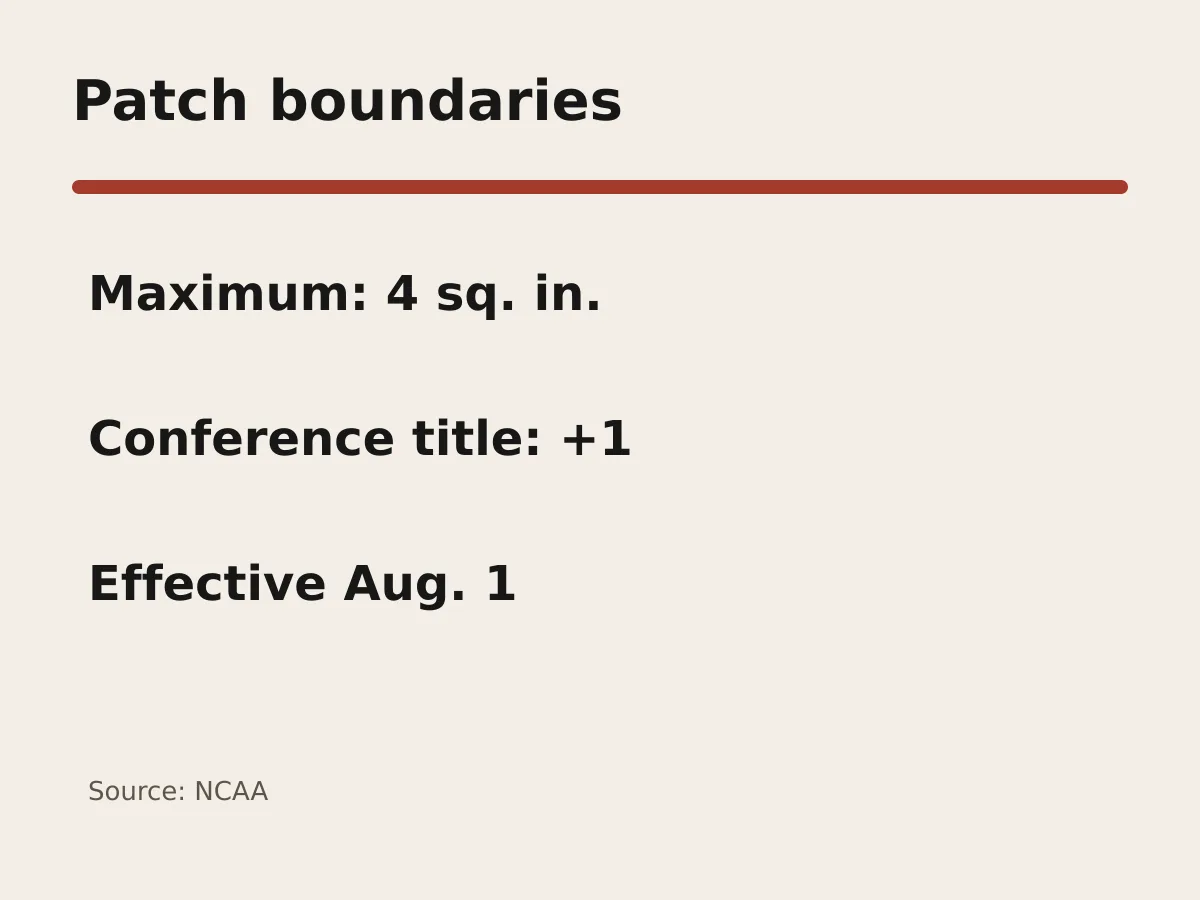
The change also separates conference-controlled postseason events from NCAA championships: an added conference-championship patch may be permissible even though NCAA postseason uniforms remain under the tighter national rule.
Actual revenue will depend on audience size, sport, school brand, sponsor demand, conference policy and conflicts with apparel agreements. The NCAA announcement did not publish a forecast of total patch revenue.
The effective rule creates new inventory on Division I uniforms while preserving a different commercial boundary for NCAA championships, adding another visible layer to college sports' changing business model.