The National Institutes of Health has expanded the All of Us Research Program's curated dataset to more than 747,000 participants, its largest data release to date.
The ninth curated repository includes more than 535,000 whole-genome sequences linked with nearly 482,000 electronic health records. NIH describes that combination as the world's largest integrated genomic and EHR database.
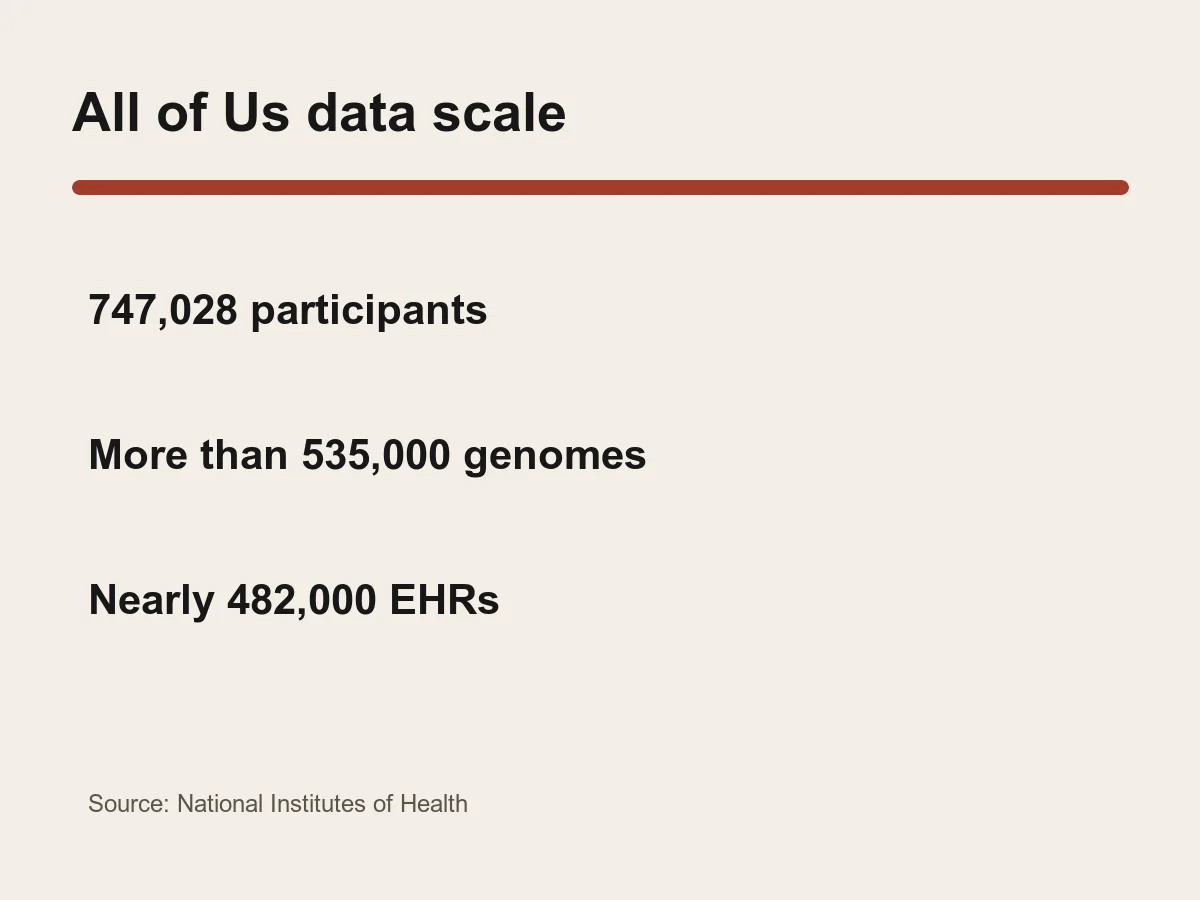
The controlled-tier characterization report gives an exact participant count of 747,028, an increase of 17.91% from the prior release's 633,547 participants.
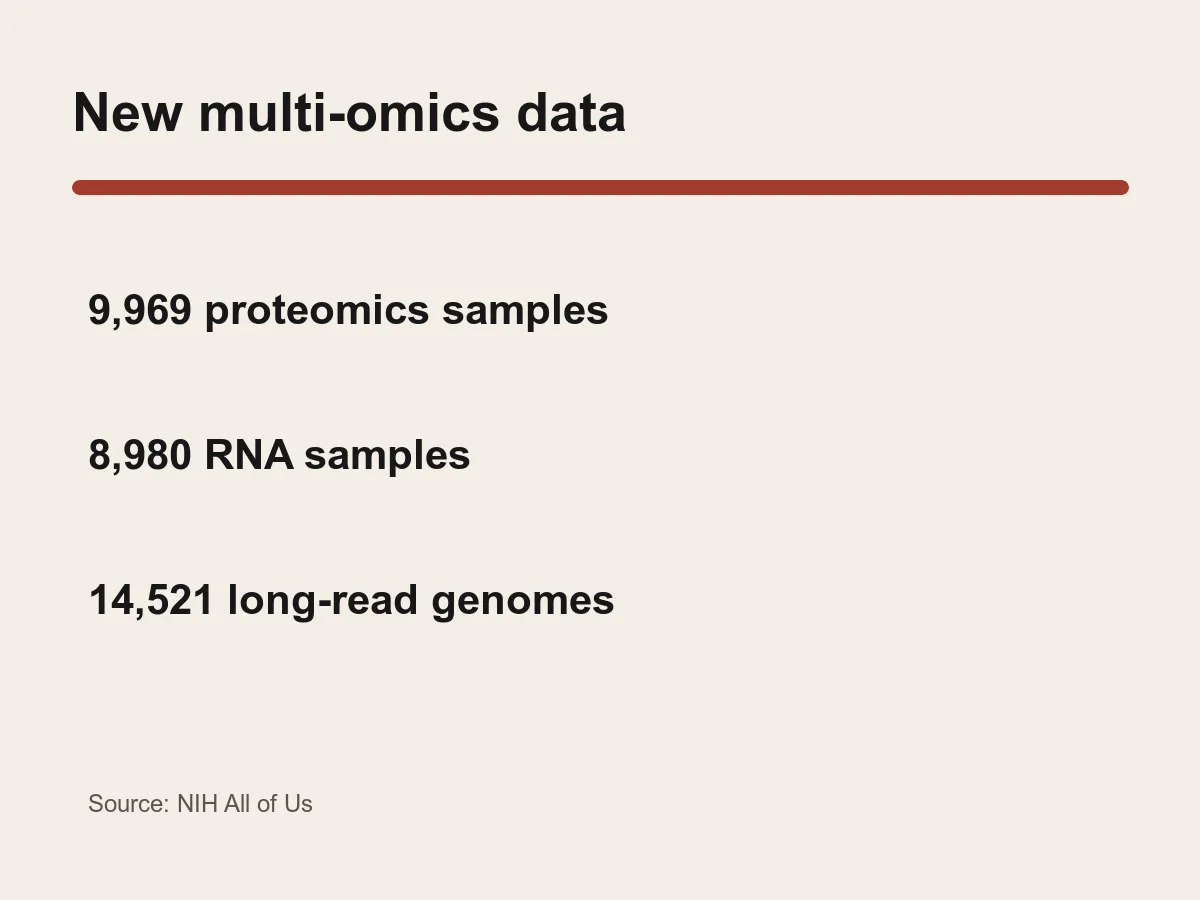
The release also moves the program into multiomics. It includes proteomics data from nearly 10,000 participants, RNA-sequencing data from nearly 9,000 and long-read whole genomes from more than 14,500.
NIH reported more than 1.3 billion genetic variants, 553,000 genotyping arrays, 96,000 structural-variant records and 600,000 physical measurements in the broader release.
More than 645,000 people in the dataset, 86% of the total, come from communities NIH classifies as historically underrepresented in biomedical research. Participants span all 50 states and territories.
Registered researchers can use the cloud-based Researcher Workbench without a data-access fee, although computing and controlled-tier governance requirements still shape practical access.
Scale does not eliminate bias or missingness. The characterization report explicitly tells researchers to consider completeness, data sources and limits on generalizing findings to populations not represented in the same way.
The release is research infrastructure, not a clinical test or treatment. Its value will depend on reproducible studies, careful privacy controls and validation of discoveries in independent populations before clinical use.