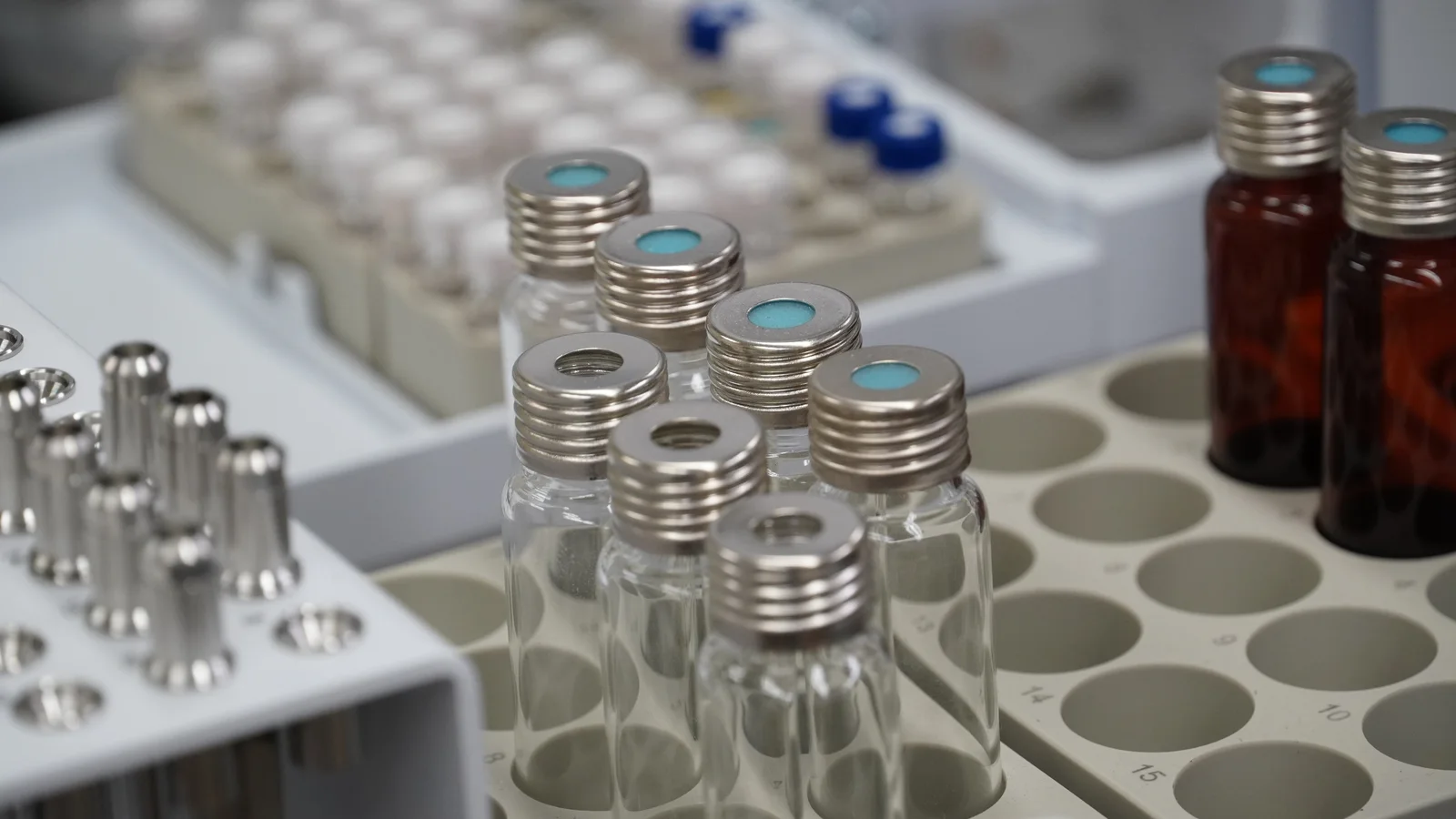
The National Institute of Standards and Technology added about 52,000 chemical fingerprints to the two main components of its commercial mass-spectral library in a 2026 update.
Mass spectra are patterns produced when an instrument ionizes a substance, breaks it into charged fragments and sorts those fragments by mass-to-charge ratio. Laboratories can compare an unknown sample against the reference collection.
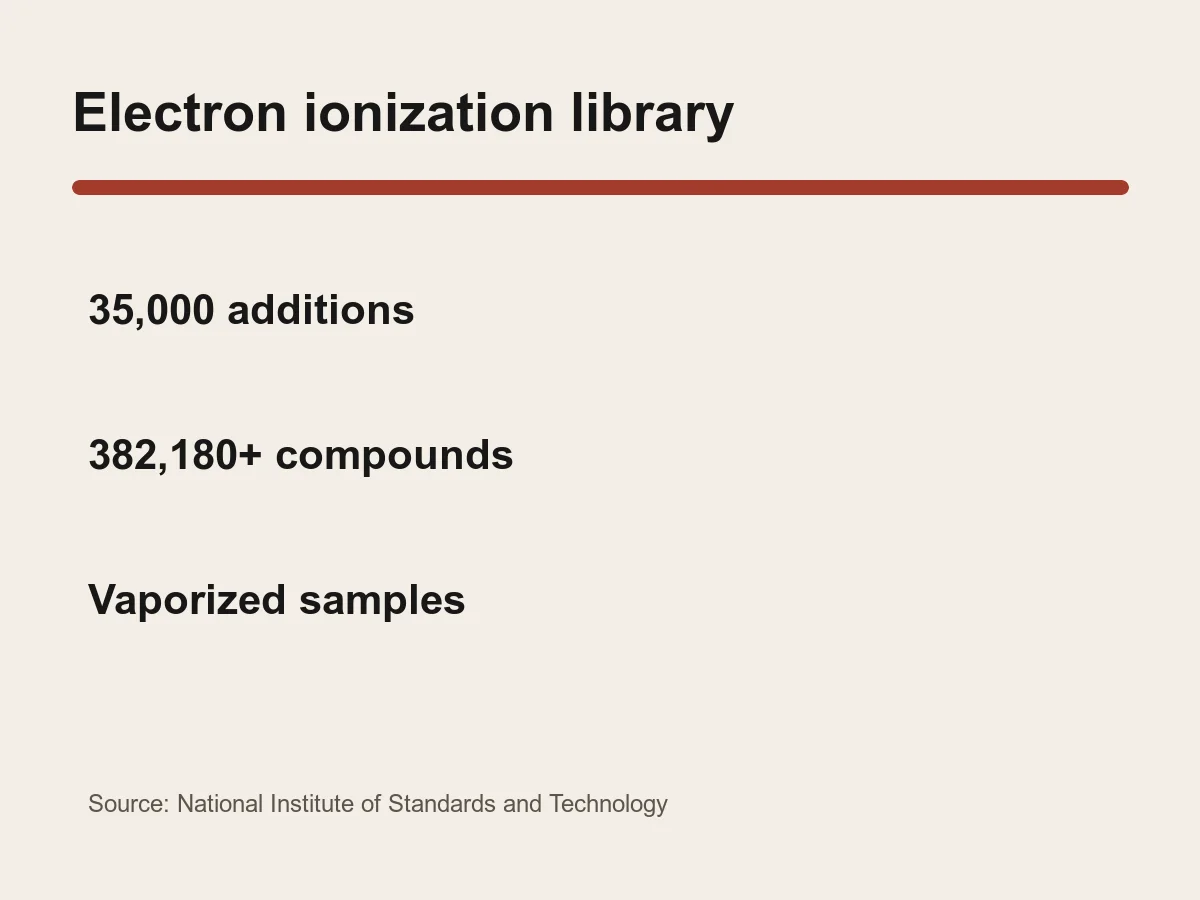
NIST added roughly 35,000 compounds to the Electron Ionization Library, bringing its total above 382,180. That collection is designed for compounds that can be vaporized for analysis.
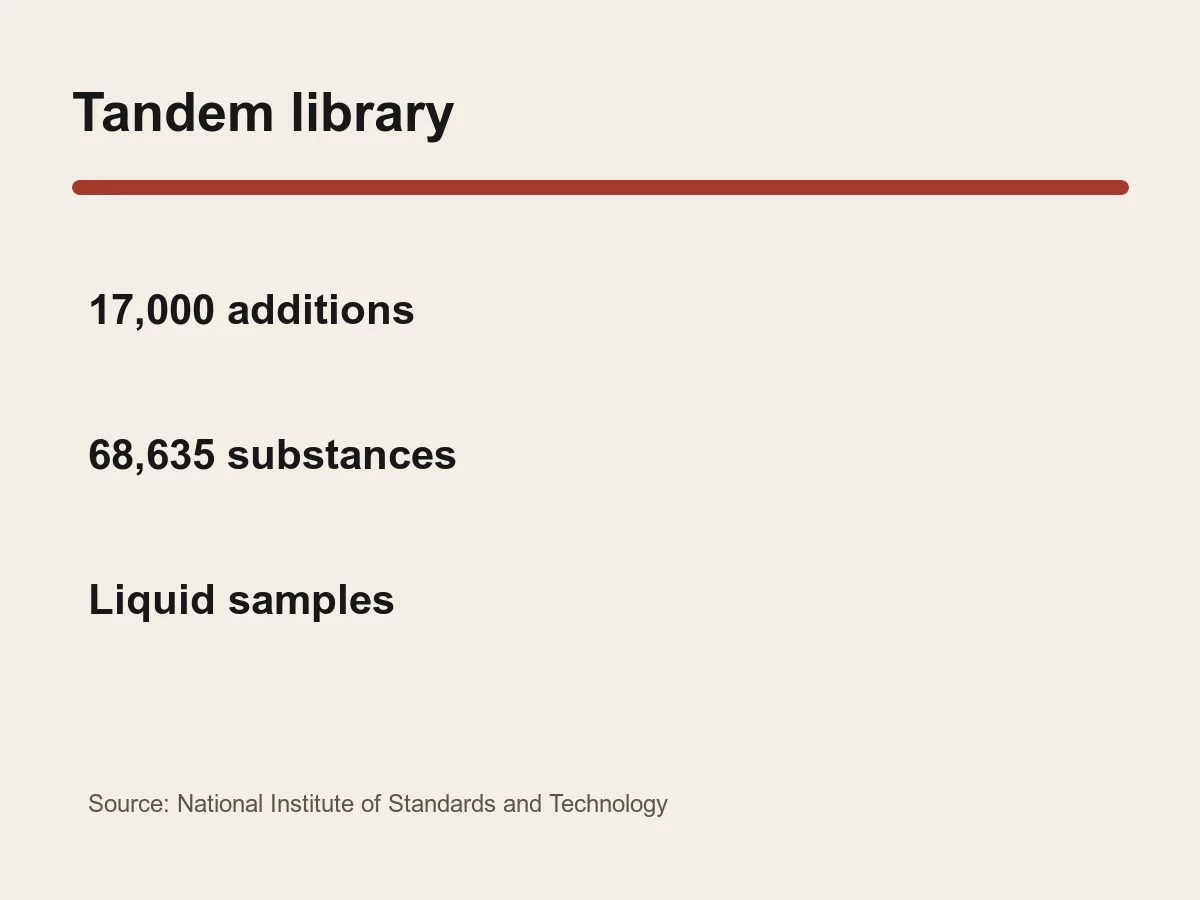
The Tandem Library, used for nonvolatile compounds dissolved in liquids, gained 17,000 entries and now contains 68,635 substances.
Researchers and manufacturers use the resource to identify materials in food, drugs, cosmetics, environmental samples, body fluids, forensic evidence and extraterrestrial samples. NIST has maintained the library since 1988.
The new entries include minor cannabinoids, nitazenes, sulfur-bearing thiophenes, complex organic compounds found in asteroid Bennu samples and an expanded set of PFAS reference spectra.
NIST says software-based evaluation and expert review are used to check the library before release. The product, commonly called NIST26, is licensed through instrument manufacturers and independent distributors rather than offered as an unrestricted download.
A larger reference library increases the set of compounds that can potentially be matched, but it does not guarantee identification of every unknown. Sample quality, instrument settings and similarity among spectra still affect results.
The totals refer to library entries, not unique substances encountered in the environment or proof that a listed compound was present in any specific sample.