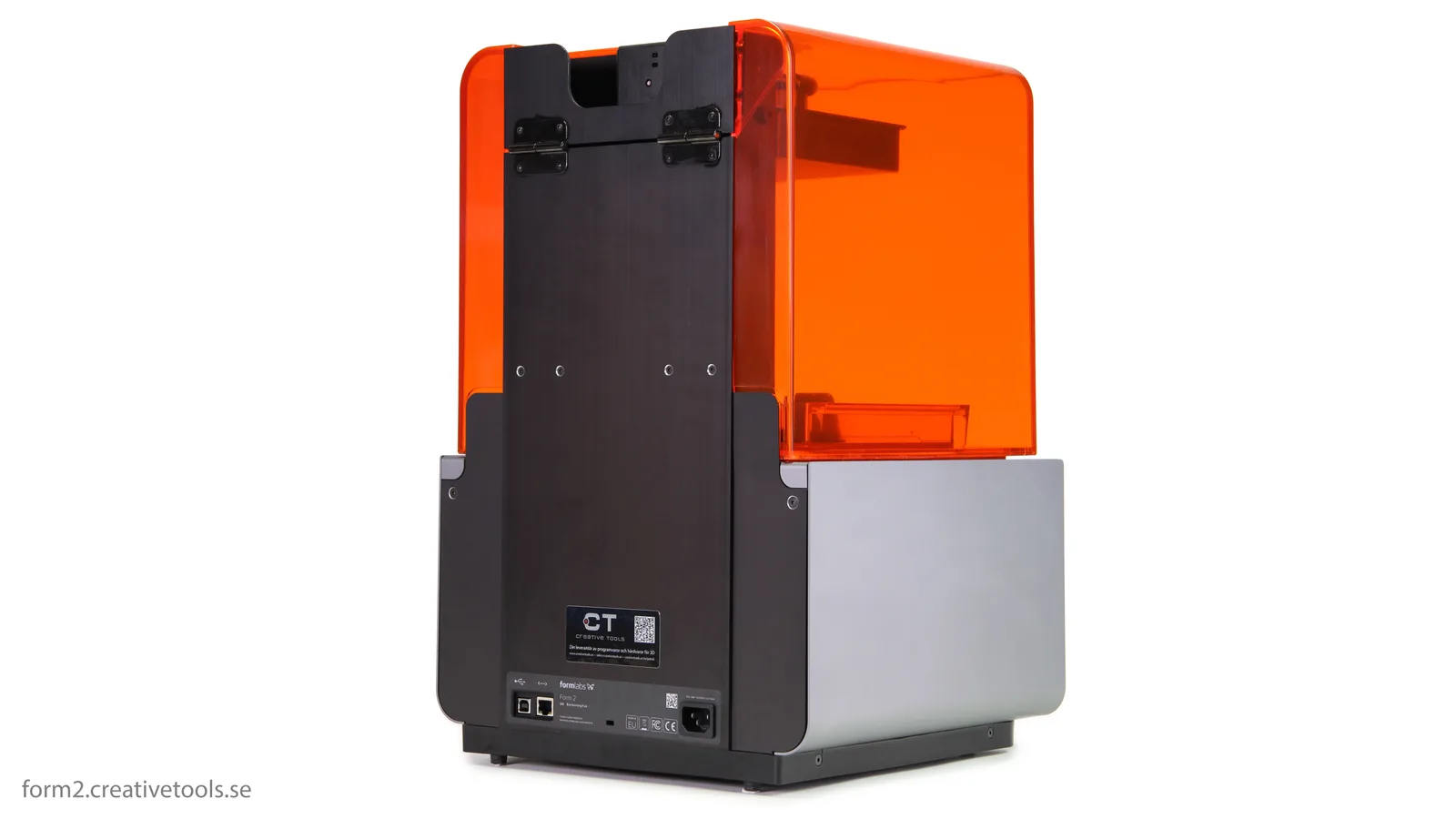
The National Institute of Standards and Technology has released a reference resin designed to make a critical measurement in photopolymer 3D printing more comparable across laboratories and machines.
Reference Material 8047 supports measurement of a resin's working curve, the relationship between radiant light exposure and the depth at which liquid resin cures into solid material.
Reliable working curves help operators expose each printed layer deeply enough to bond with the next one without curing too much material. Errors can change dimensions, weaken bonding or reduce reproducibility.
NIST says each unit contains about 20 grams of photoactive resin. The mixture is roughly 40% each of two acrylate components and 20% of a third, with smaller quantities of a photoinitiator and photoabsorber.
Participants in an interlaboratory study measured cure depth and radiant exposure using three sets of NIST-built, calibrated light sources at wavelengths of 385 and 405 nanometers.
NIST analyzed the nonzero cure-depth and exposure pairs with the Jacobs Equation to calculate penetration depth and critical exposure energy, two parameters used to characterize photopolymer behavior.
A shared material lets laboratories test whether differences in a working curve come from equipment, calibration or analysis rather than from using different resin batches.
RM 8047 does not certify every printer, process or finished part. Manufacturers still need to validate layer settings, geometry, post-curing and performance for each intended application.
The reference material creates a common starting point for that work: the same documented resin can be exposed at the same wavelengths and its measured working curve compared across instruments and facilities.