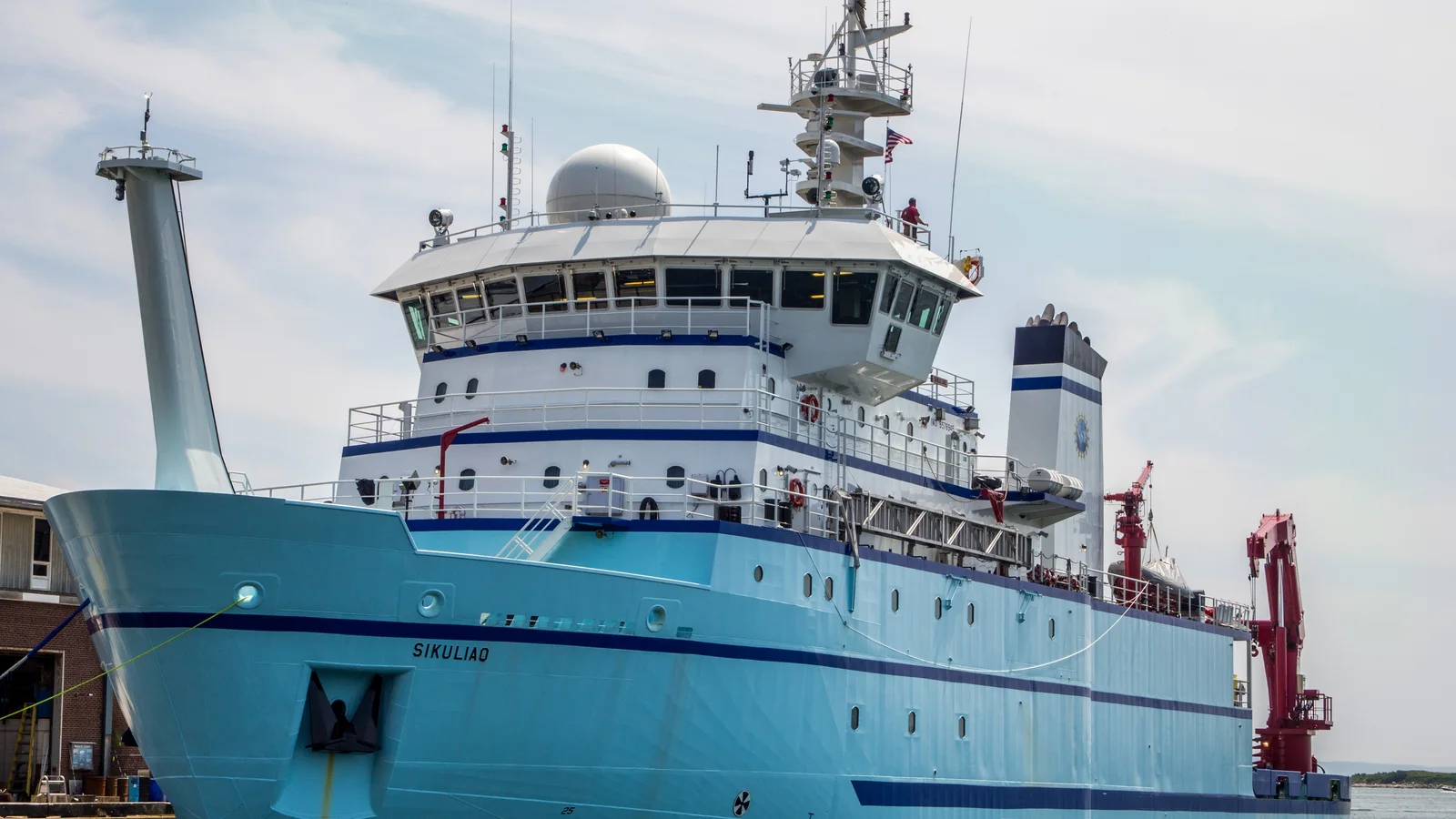
NOAA scientists departed San Diego aboard the research vessel Sikuliaq for a 30-day survey of ocean acidification and low-oxygen conditions along the U.S. West Coast.
The 261-foot vessel is traveling north toward Washington while researchers measure seawater chemistry, biology and physics across coastal and offshore stations.

The team is collecting environmental DNA and observing phytoplankton and zooplankton in addition to standard carbonate-chemistry measurements. Those data can connect changing seawater conditions with marine ecosystems.
Two days after the ship's departure, an uncrewed SeaTrac vessel was scheduled to begin a southbound route from Washington. NOAA plans to compare its measurements with the ship's observations and other sensors.
The survey occurs during the season when acidification and hypoxia can be most pronounced in West Coast waters. NOAA says a possible El Niño adds another source of variability to the 2026 conditions.
Ocean acidification occurs as seawater absorbs carbon dioxide and its chemistry changes. Lower calcium-carbonate saturation can make shell formation more difficult for oysters and other organisms, but impacts vary by species, life stage and local conditions.
The cruise will help calibrate models and autonomous sensors used by researchers, fishery managers and coastal communities. A single survey cannot by itself define long-term trends.
Shipboard data will require processing and quality control after collection. Preliminary observations can change, and the survey announcement did not report final 2026 acidification or oxygen results.
NOAA characterizes the work as part of a long-running West Coast observing effort. Comparisons across years must account for season, location, upwelling, temperature and large-scale climate patterns.