
Declining nitrogen-oxide pollution is giving some reactive organic molecules more time to rearrange into compounds that can help form fine particles over North American cities, a new NOAA-led study reports.
Researchers combined aircraft measurements from the 2023 AEROMMA campaign with observations from NASA's TEMPO satellite. The flights sampled air over New York, Chicago, Toronto and Los Angeles.
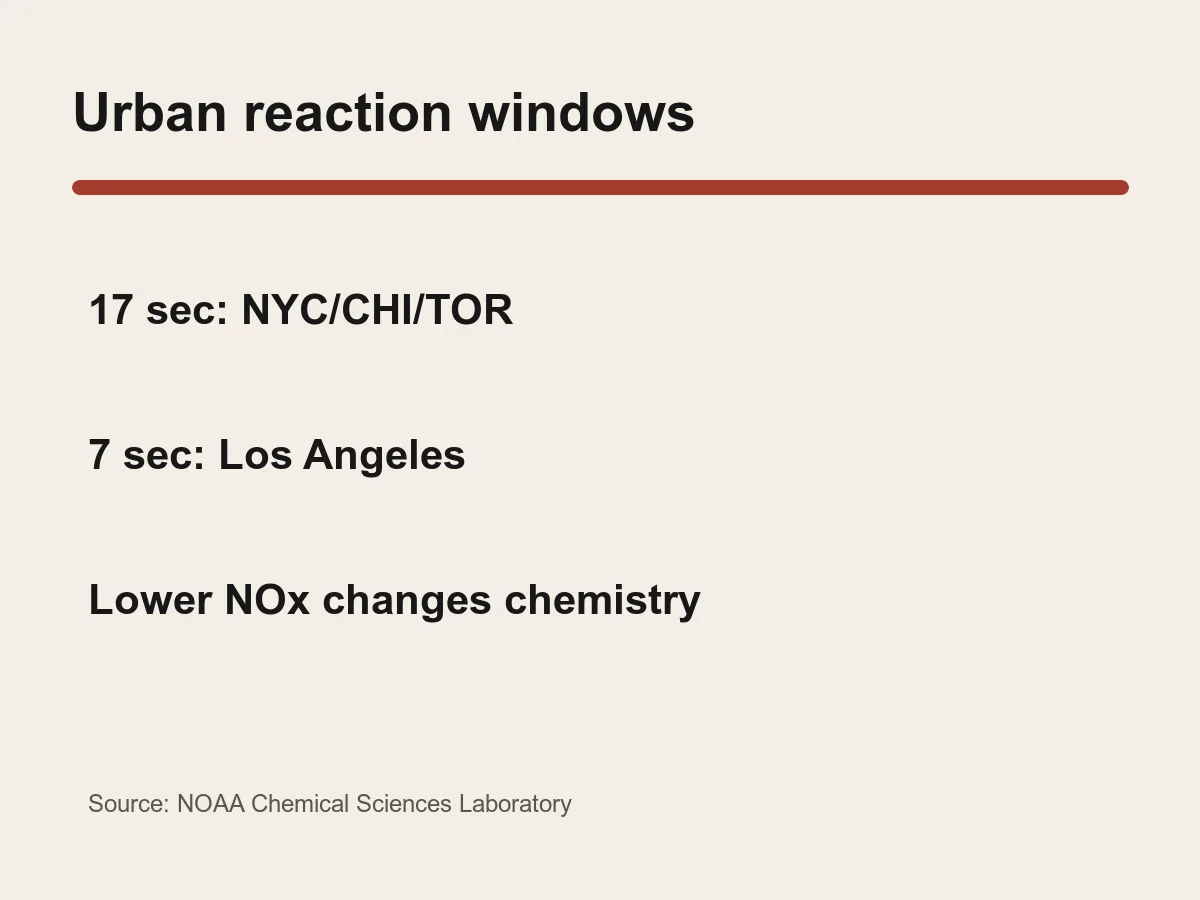
The team inferred that organic peroxy radicals had average reaction windows near 17 seconds in New York, Chicago and Toronto, compared with about 7 seconds in Los Angeles, where nitrogen-oxide levels remained higher.
At lower nitrogen-oxide concentrations, some radicals can internally rearrange and add oxygen through autoxidation. The resulting highly oxidized molecules have low volatility and can condense into secondary organic aerosol, part of fine-particle pollution.
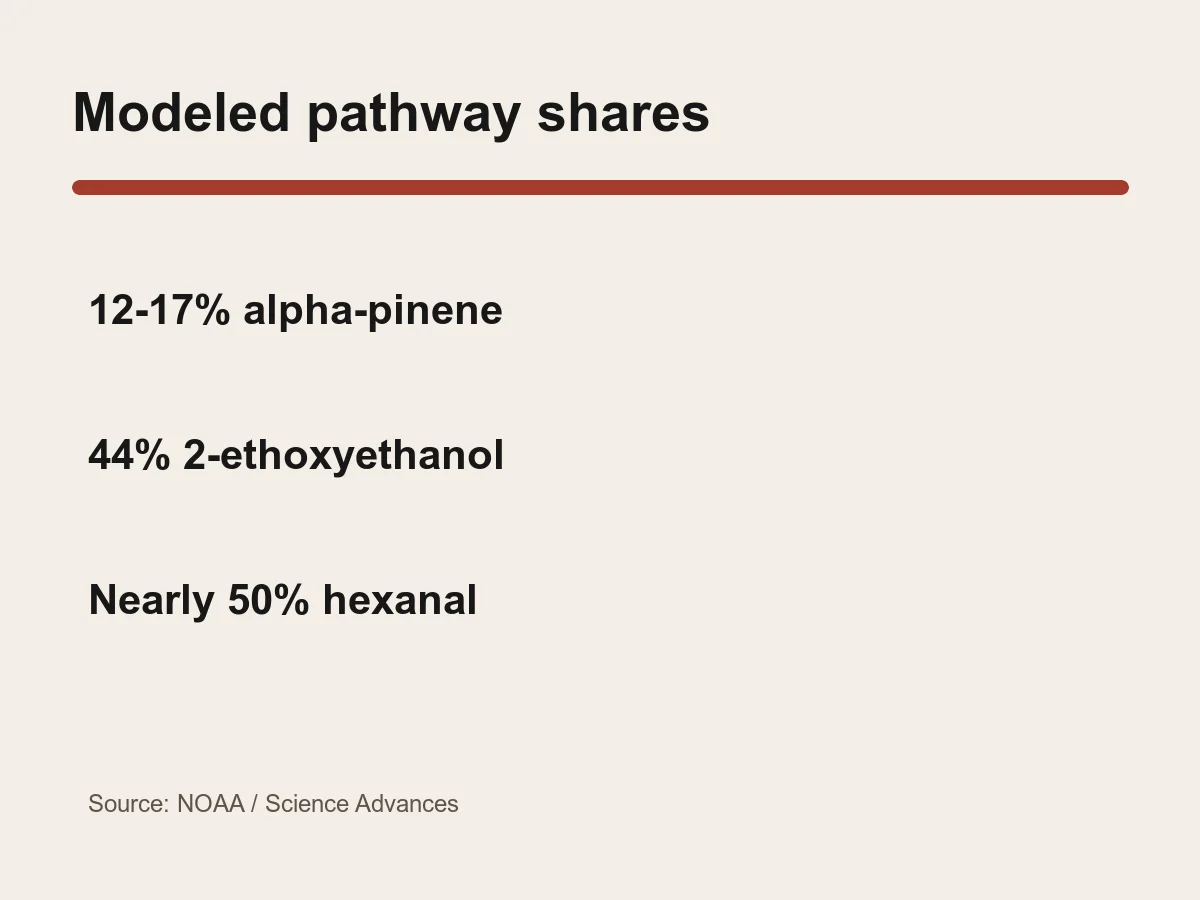
For alpha-pinene, the researchers estimated that 12% to 17% of radicals used the isomerization pathway across the four cities. The estimated share was 44% for 2-ethoxyethanol and approached 50% for hexanal.
The finding does not mean nitrogen-oxide reductions are harmful overall. Those reductions have helped cut ozone and smog, while the net effect of the newly emphasized particle pathway remains an open research question.
NOAA says many air-quality models do not fully represent these reactions because laboratory rate measurements exist for only a limited set of compounds. Omitting them could understate some summer particle formation.
The measurements and calculations characterize atmospheric chemistry during a 2023 field campaign. They do not directly estimate a citywide health burden or show that every neighborhood experiences the same concentrations.
The study identifies a mechanism that may become more important as nitrogen oxides continue to fall. Further measurements and model development are needed to quantify its contribution to PM2.5 under different urban conditions.