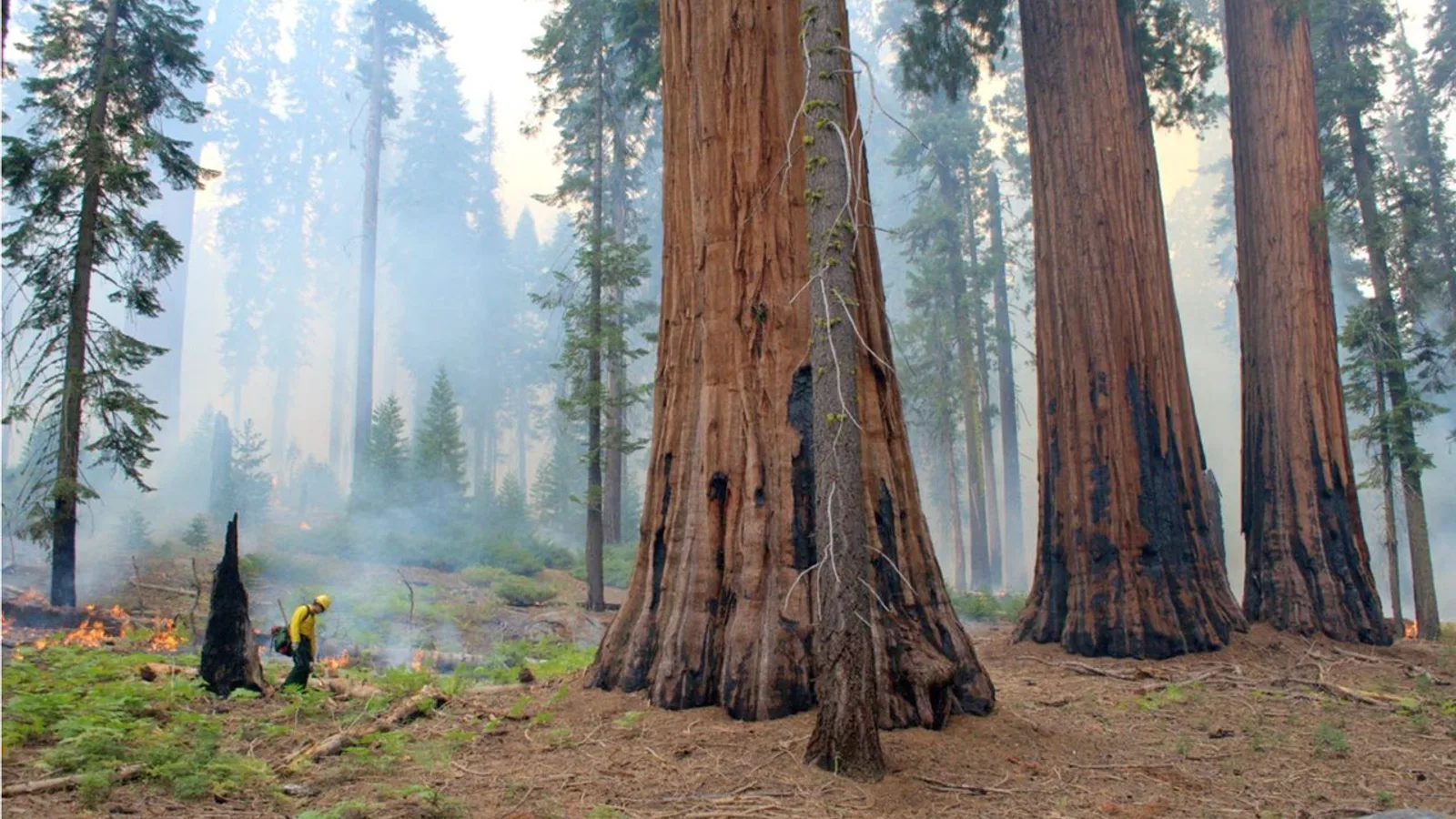
Giant sequoias in forests treated with prescribed fire were nearly four times more likely to survive extreme wildfire than trees in untreated areas, according to a NASA-funded study.
Researchers analyzed 26,403 giant sequoias in 19 groves after California's 2020 and 2021 fire seasons. They combined lidar, tree-location maps, high-resolution imagery and statistical modeling to estimate mortality under different management histories.

The team estimated that prescribed burns saved roughly 1,800 giant sequoias. Those intentional, controlled fires reduce accumulated underbrush, dead wood and other fuel that can drive high-intensity wildfire.
The study focused on a period of exceptional damage. NASA said 6.8 million acres burned in California across the two fire seasons and 19% of the mature giant-sequoia population across its natural range was destroyed.
Giant sequoias naturally occur only on the western slopes of California's Sierra Nevada. They can exceed 300 feet in height, 30 feet in diameter and 3,000 years in age, according to NASA's summary.
Researchers said the new evidence strengthens a practice long supported by field experience but previously lacking species-wide quantitative evaluation under extreme fire conditions.

The analysis does not mean every prescribed burn prevents later tree death. Survival depends on fire severity, treatment history, local fuels, weather and other conditions, and controlled fire itself requires planning and suitable operating windows.
The researchers used remote sensing to evaluate individual large trees across multiple groves, an approach they say could help assess management effects in other old-growth forests where field inventories alone are difficult.
The result is evidence about risk reduction, not elimination. As severe-fire conditions change, continued monitoring will be needed to test whether the estimated protection holds across future fires and different treatment intervals.