
A searchable Japanese-language catalog now gives researchers direct access to the Smithsonian's fully digitized Pulverer Collection of rare Japanese illustrated books.
The National Museum of Asian Art launched the resource with Japan's National Institute of Japanese Literature as the institutions renewed a partnership that began in 2020.
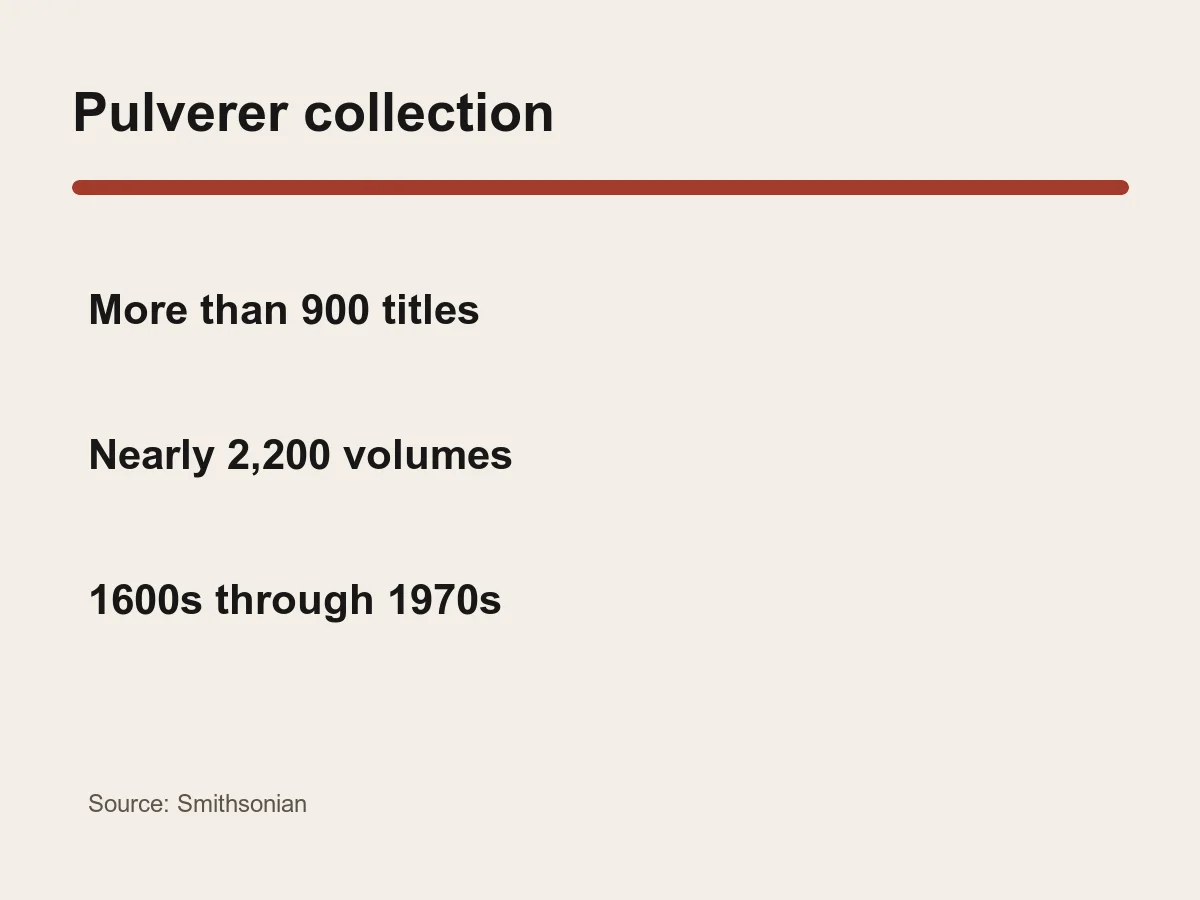
The collection contains more than 900 titles in almost 2,200 volumes. The books range from the early 17th century through the 1970s, with a concentration in illustrated works produced during and after Japan's Edo period.
The digital collection was already comprehensive but available only in English. The museum supplied images and metadata for integration into the Japanese institute's database, removing a language barrier for scholars, students and other readers.
Gerhard and Rosemarie Pulverer assembled the books over about 30 years. The Smithsonian acquired the full collection in 2007 and describes it as one of the strongest collections of Japanese illustrated books outside Japan.
The resource supports comparative study because researchers can search Japanese-language descriptions alongside images and bibliographic information. Digitization expands access without requiring the physical volumes to travel.

The renewed agreement also calls for the Japanese institute to share expertise in digitization and databases. The museum frames the work as infrastructure for joint research rather than a one-time translation project.
Online access does not replace conservation or examination of original materials. Color, paper, binding, scale and physical evidence can require direct study under museum handling rules.
The release did not provide traffic, research-output or user-adoption targets. The immediate, verifiable change is that a collection once searchable only in English can now be queried in Japanese through a partner platform.