Current spending by U.S. public school systems reached a record $17,619 per pupil in fiscal 2024, up 6.6% from $16,526 a year earlier, the Census Bureau reported.
The figures come from the Annual Survey of School System Finances and are not adjusted for inflation or regional cost-of-living differences. They cover public elementary and secondary systems in every state and the District of Columbia.

New York recorded the highest state-level current spending at $31,918 per pupil, followed by the District of Columbia at $31,529 and Vermont at $28,818. Idaho was lowest at $11,060.
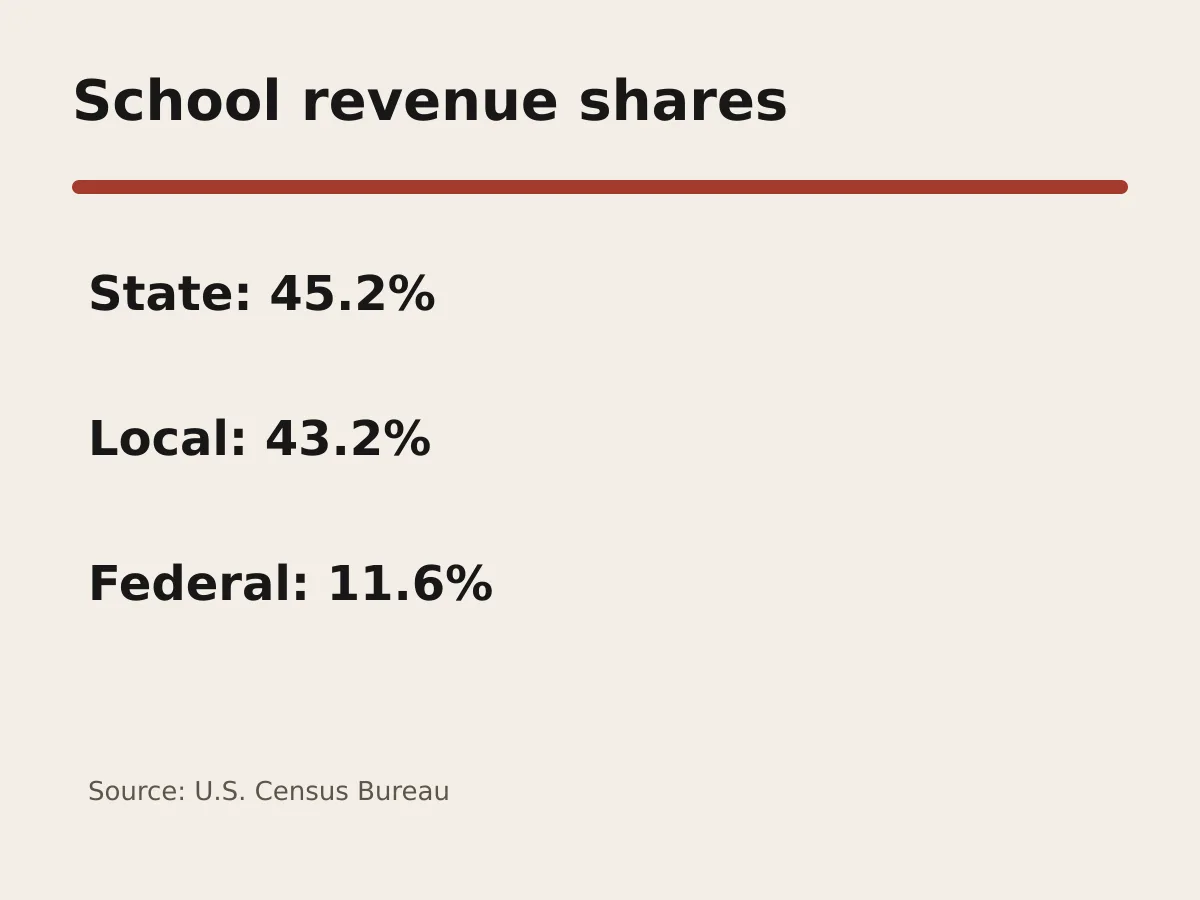
Revenue from all sources totaled $994.9 billion, a 5.1% increase from fiscal 2023. State governments provided $450.0 billion, or 45.2%, while local sources supplied $429.8 billion, or 43.2%.
Federal revenue fell 4.4% to $115.1 billion and accounted for 11.6% of the total. The federal share varied substantially among states, from 22.7% in Mississippi to 6.3% in New Jersey.
Total expenditures were $983.7 billion. Current spending accounted for $842.3 billion, capital outlay for $113.1 billion and other categories made up the remainder.
Instruction represented $495.0 billion, or 58.8% of current spending. Instructional salaries alone totaled $291.8 billion, 29.7% of all expenditures.
Per-pupil rankings do not measure school quality or student outcomes on their own. Staffing costs, enrollment, geography, services, wages and accounting structures differ across systems.
The release nevertheless establishes a nationwide financing benchmark: nominal spending per student set a record even as the federal contribution declined and state and local sources supplied nearly nine-tenths of revenue.