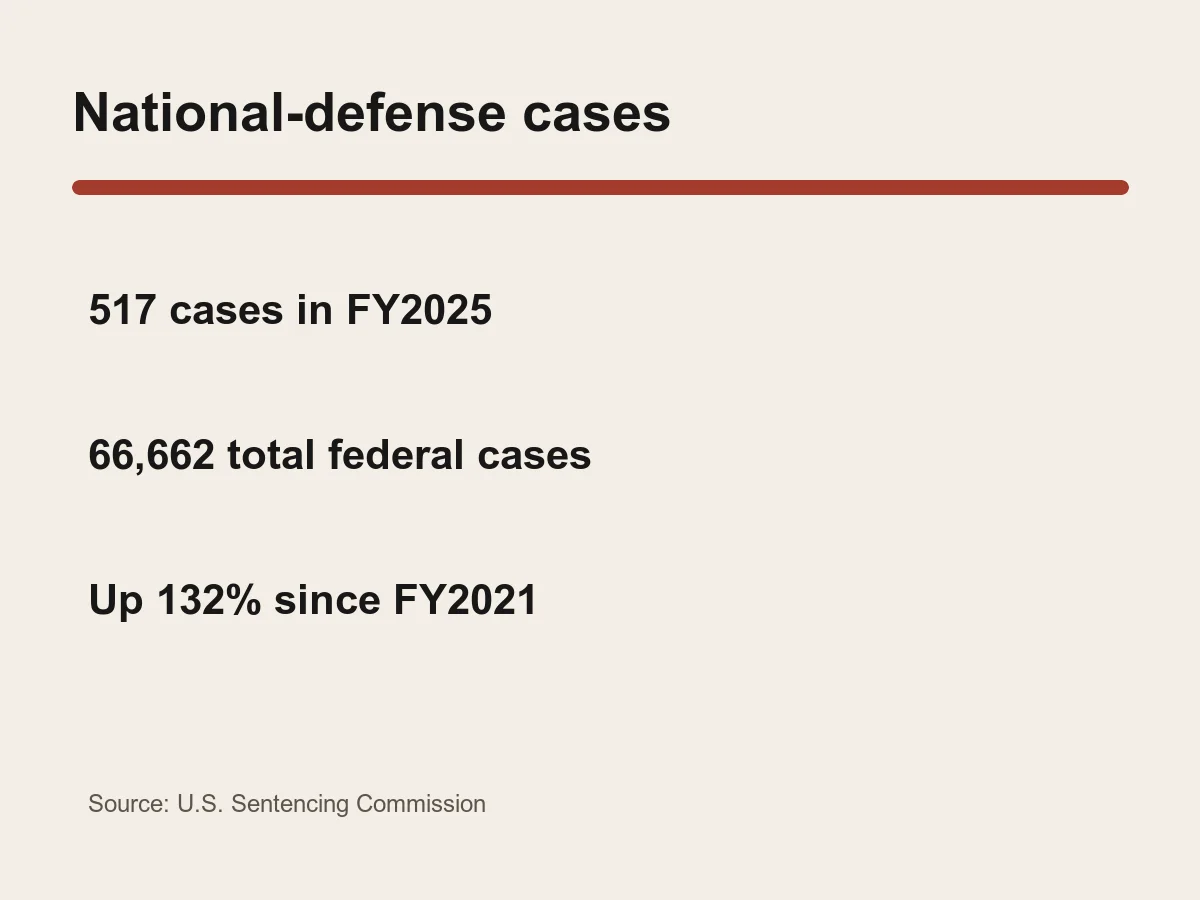
Federal courts sentenced people in 517 cases that the United States Sentencing Commission classified as national-defense offenses in fiscal 2025, 132% more than in fiscal 2021.
Those cases were 0.8% of the 66,662 cases reported to the commission for the year. The category is broader than espionage or terrorism and depends on the sentencing guideline or conduct assigned to each case.
USSC says national-defense cases include offenses under the guideline chapter for national defense and weapons of mass destruction, other guideline cases involving conduct that threatens national defense and cases receiving the terrorism sentencing adjustment.
A 2025 classification change is central to the trend. In April 2025, portions of the U.S.-Mexico border were designated National Defense Areas, and USSC assigned some convictions for illegally entering those locations under 50 U.S.C. § 797 to the national-defense crime type.
The Western District of Texas accounted for 252 cases, followed by the Southern District of Texas with 66, Arizona with 51, Northern Alabama with 49 and Middle Florida with 13.
Eighty-five percent of people sentenced in the category received prison terms. The average sentence was 21 months, but averages varied sharply by offense and by whether the terrorism adjustment applied.
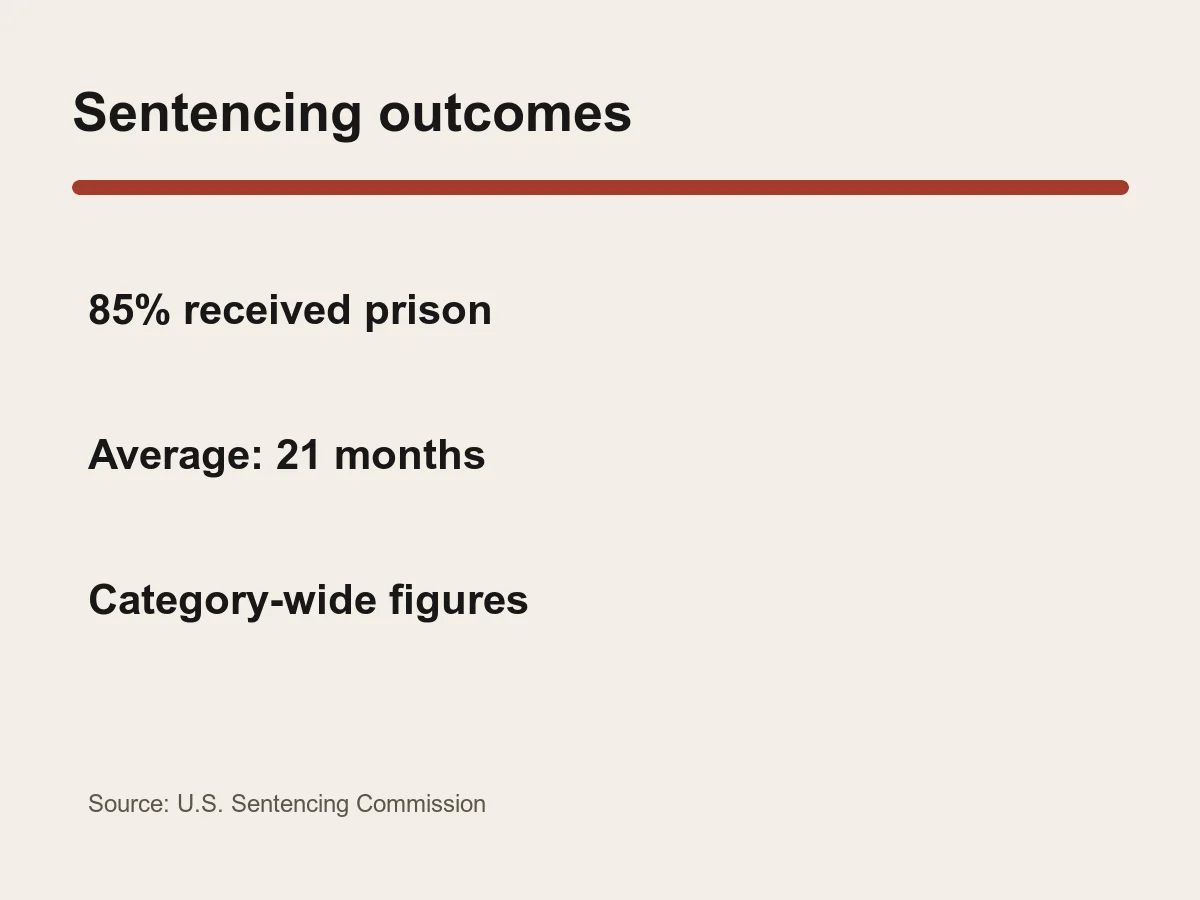
The average was 24 months for unauthorized arms-export cases, 23 months for export-control and terrorism-financing cases, and 111 months for support-to-terrorism cases. People receiving the terrorism adjustment averaged 196 months.
The quick-facts sheet describes sentenced federal cases, not arrests, intelligence investigations or a count of unique threats. It also excludes cases with incomplete sentencing information from some demographic calculations.
The 132% increase therefore needs classification context. A useful follow-up is to separate the 2025 National Defense Area cases from the longer-running national-security categories before interpreting the change as a shift in underlying conduct.